Blog Article

LinkedIn's January 2026 Labor Market Report reveals a paradox that should concern every talent leader: while global hiring remains 20% below pre-pandemic levels and job transitions sit at a 10-year low, application volumes have never been higher. Across every boardroom and hiring team, the same frustration echoes: the process of hiring feels fundamentally harder than it should be. Pipelines are full, applications are surging, and we have more AI tools than ever before. Yet outcomes are slower, less predictable, and often fail to deliver the high-impact talent we need.
The prevailing, comfortable narrative is that the labor market is broken, or that AI has disrupted talent acquisition beyond recognition. This is a profound misdiagnosis.
Hiring is not broken. The systems we use to manage talent are.
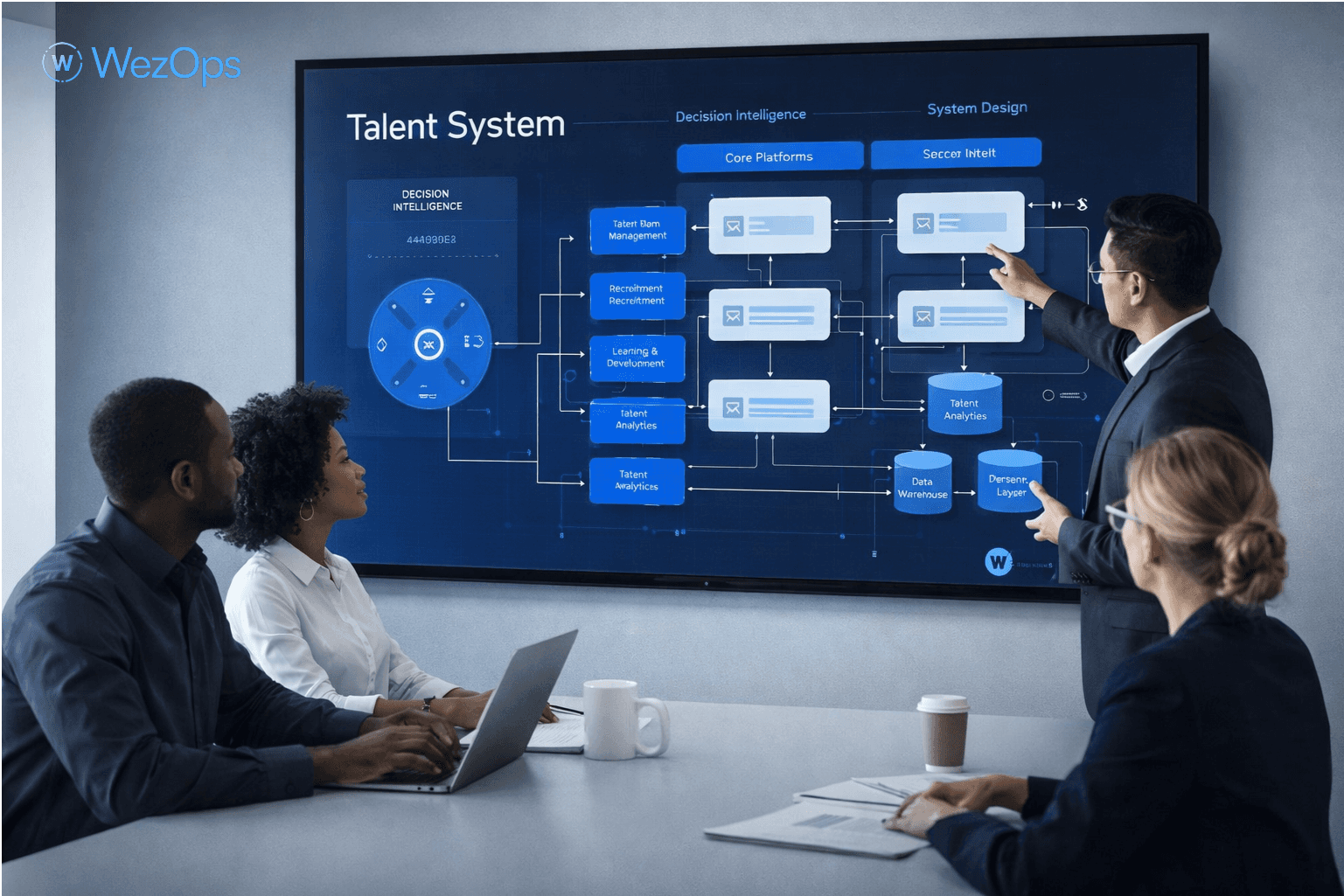
What is quietly breaking down is the architecture of our Talent Acquisition Operations, HR Operations, and People Analytics. These systems were built for a different era: one of slower change, predictable roles, and lower volume. AI did not create these cracks; it merely exposed the structural fragility that was already there.
If we misdiagnose the problem, we will continue to apply the wrong fixes, spending millions on tools that only accelerate a flawed process. The real challenge is not a lack of candidates or technology; it is a crisis of decision quality.
The Crisis of Signal Over Volume
The current market environment presents a paradox for talent professionals: high activity with low movement. The LinkedIn data reveals this isn't a uniform slowdown: it's a geographic rotation. While advanced economies struggle with hiring down 20-35% compared to pre-pandemic levels, emerging markets tell a different story entirely. India shows +40% growth, the UAE +37%, while traditional powerhouses like the Netherlands (-35%), France (-30%), and the UK (-25%) continue to contract. Even Mexico, often positioned as a nearshoring winner, sits at -20%.
This geographic divergence matters because it signals something deeper than cyclical slowdown: a fundamental restructuring of where work happens and where talent concentrates. Yet most TA systems remain anchored to legacy geographic assumptions, unable to capitalize on this shift.
For TA and HR teams, this is not a volume problem; it is a signal problem.
Most legacy recruiting systems were designed for throughput: to manage the flow of candidates. They are optimized to process applications faster, but they were never built to improve human judgment. When candidates use generative AI to tailor resumes and apply at scale, the input layer becomes distorted. Our response of adding more automation to the screening side creates a closed loop: AI-generated inputs filtered by AI-generated outputs.
The inevitable result is speed without confidence. Hiring teams move faster, but their trust in the shortlist erodes. Hiring managers disengage. Recruiters are forced into a defensive posture, defending shortlists rather than strategically shaping them. This is not a tooling failure; it is a systems design failure that erodes the credibility of the entire TA function.
The Software Engineering Paradox: When Supply and Demand Decouple
Nowhere is the system failure more visible than in technical hiring. The LinkedIn report documents a stunning contradiction: Computer Science graduates are hitting record highs while entry-level software engineering hiring has reached record lows. This isn't a temporary mismatch: it's evidence that our hiring systems have fundamentally decoupled from market reality.
The data shows that from 2016 to 2022, companies added more entry-level workers than experienced workers, inflating expectations for new graduates. Then from 2022 to 2025, entry-level share declined modestly, returning toward historical norms. But the system didn't adjust: universities continued expanding CS programs based on the 2020-2022 boom, while companies retreated to pre-pandemic hiring patterns.
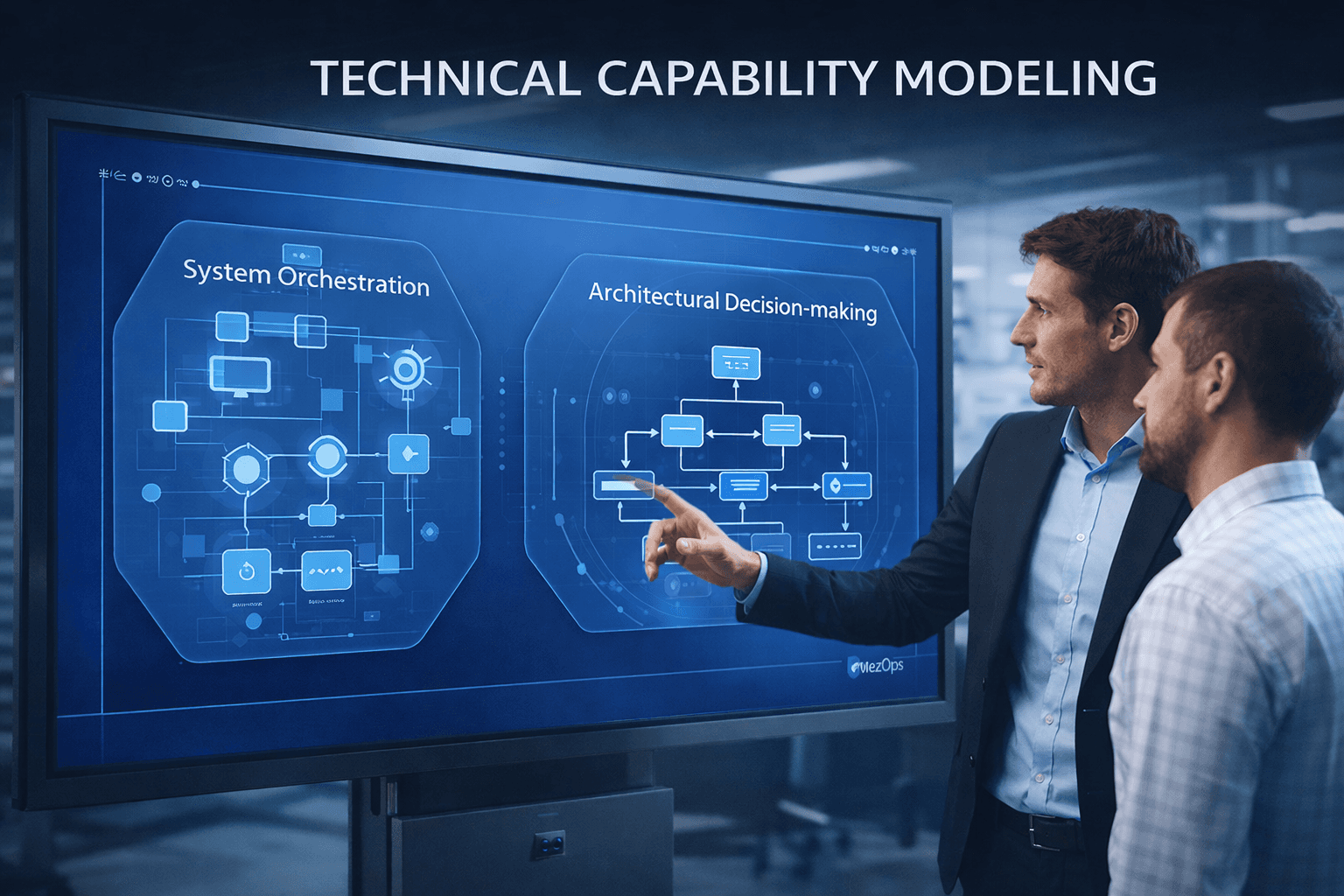
The result? A generation of graduates trained for jobs that were designed for a different technological moment. Engineering work has fundamentally changed. It is less about writing lines of code and more about system orchestration, validating AI-assisted outputs, and architectural decision-making. Productivity expectations are higher: the report shows Fortune 100 technology companies grew revenue 15% while headcount rose only 6% from 2023 to 2024. The definition of a "good engineer" is shifting from a narrow skill set to a broad capability for problem-solving and system design.
Yet many technical hiring processes remain frozen in time, emphasizing static skill checklists, resume-driven filtering that rewards self-promotion over substance, and interviews focused on trivia rather than real-world capability modeling.
This isn't just a hiring problem: it's a systems design problem. When entry-level and experienced software engineers now face similar hiring conditions despite vastly different supply dynamics, the market isn't broken. The filtering mechanisms are.
TA: From Service Function to Decision Design
For too long, Talent Acquisition has been positioned as a delivery function: take an intake, manage the pipeline, close the position. This framing is obsolete.
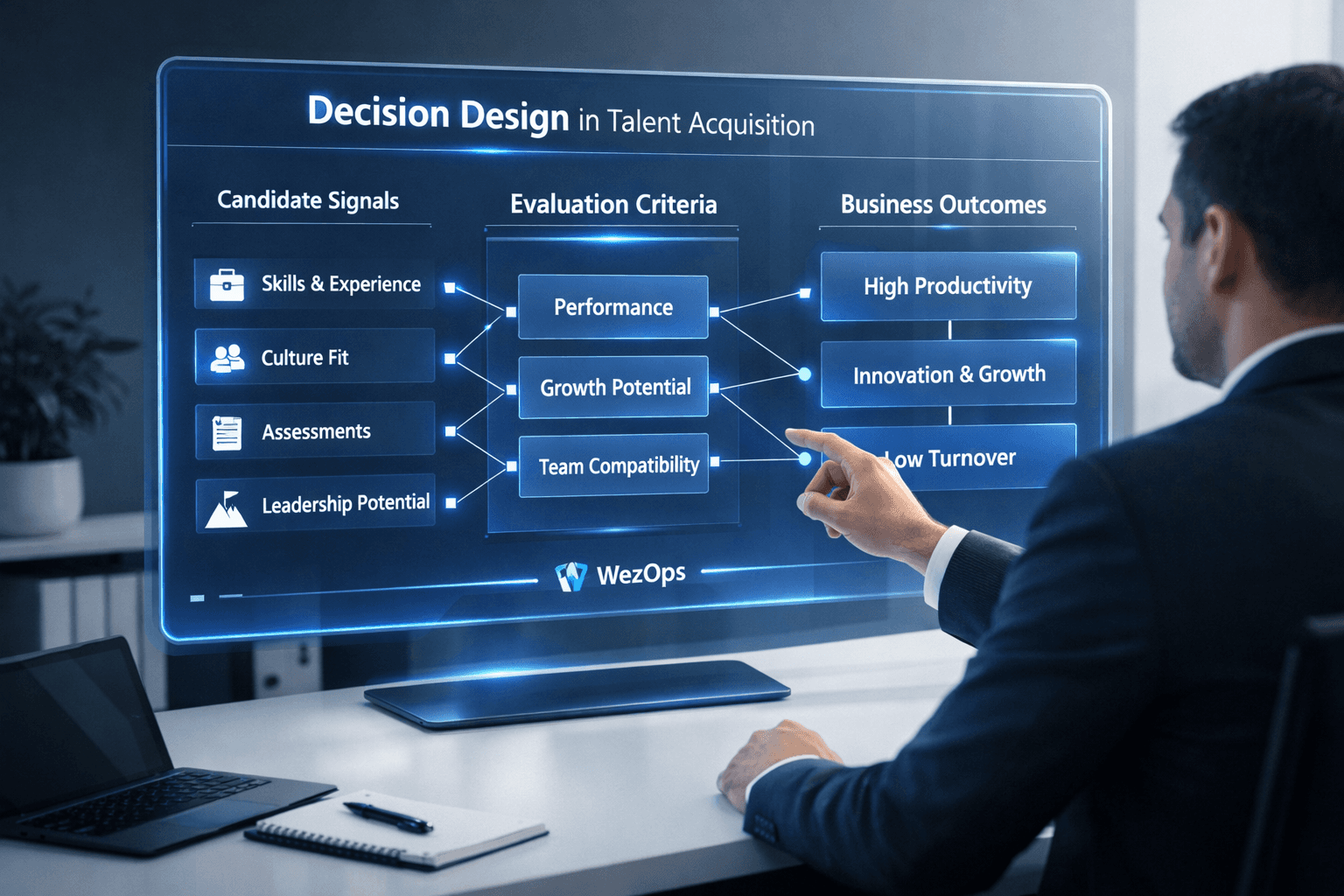
In a market defined by role ambiguity, rapid skill depreciation, and constant change, TA is fundamentally a decision design function. Its primary value is not speed, but clarity.
Consider the emergence of entirely new job categories documented in the LinkedIn report. In just two years, employers created 1.3 million AI-related job opportunities globally, including 774,000 data annotators, 298,000 AI forensic analysts, 177,000 AI engineers, and 49,000 forward-deployed engineers. Forward-deployed engineering roles alone saw 42x growth since 2023. These roles didn't exist five years ago. They have no standardized job descriptions, no established career pathways, no talent pools with proven track records.
How do you hire for roles that are being invented in real-time? Not with faster ATS screening. You need TA teams capable of answering strategic, product-level questions:
Which signals truly predict success in an evolving role?
Where does automation assist, and where must human nuance take over?
How do we ensure consistency in evaluation without flattening the unique capabilities we seek?
How do we align hiring criteria with measurable business outcomes, not just abstract requirements?
These questions require structured thinking, continuous experimentation, and ownership over the hiring system itself. This is why the most effective TA organizations are building hybrid roles: part technologist, part business strategist, whose job is to ensure the system works, not just to fill the roles within it.
Furthermore, in a high-volume environment, the human element becomes a critical filter. The LinkedIn data shows applicants are 3.6x more likely to be hired if they are connected to an employee at the company prior to applying. As application volumes have increased 12% since 2023, this network signal has become increasingly valuable. Organizations that continue to treat TA as a mere execution layer will struggle, regardless of their budget. Understanding how to enhance your talent acquisition as a service becomes essential for modern organizations.
The Foundation Model Signal: Where Growth Actually Lives
While most sectors show subdued hiring, the LinkedIn report reveals pockets of hypergrowth that expose which organizations have built adaptive talent systems. Foundation model companies (those training large-scale AI models used across applications) are adding headcount aggressively at +92% year-over-year. These companies maintain 28% of their workforce classified as AI talent, nearly triple the concentration of traditional Big Tech firms (10%).
This isn't random. These organizations are designed around capability acquisition, not role filling. They hire for potential and trajectory, not credentials. They operate in a space where yesterday's job description is obsolete by Thursday. Their TA systems are built for ambiguity, not certainty.
The contrast is instructive. While foundation model companies grow at 92% annually, most advanced economies contract. The variable isn't talent availability: it's system design. Organizations structured to identify, evaluate, and integrate emerging capabilities thrive. Those anchored to legacy role architectures stagnate.
HR Operations: The Engine of Organizational Resilience
While TA absorbs the complexity of external hiring, HR Operations is absorbing the instability of the internal organization.
Legacy HR systems were built on the assumption of role stability and predictable career paths. That assumption is now a structural risk. Roles evolve continuously. Skills depreciate quickly. Teams pivot rapidly. The LinkedIn report documents this acceleration: the fastest-growing skills in the US include AI literacy (growing 70% year-over-year), conflict mitigation, adaptability, process optimization, and innovative thinking. Notice that only one is technical; the rest are distinctly human capabilities required to navigate constant change.
In this environment, HR Ops cannot function as a compliance engine alone. Its role has shifted toward organizational resilience.
A resilient HR system enables:
Skill Visibility: Real-time, dynamic mapping of capabilities across the organization, not just titles and tenure.
Proactive Mobility: Facilitating internal movement before attrition becomes the only option.
Rapid Reconfiguration: Allowing teams to pivot and roles to be redefined without chaos.
Many internal bottlenecks (talent hoarding by managers, employee disengagement, and high churn) emerge not because people resist change, but because the underlying HR systems cannot support it. When employees cannot see a path for growth, they leave. When managers cannot redeploy talent, they hoard it. The failure is systemic, and the cost is measured in lost institutional knowledge and increased external hiring pressure.
Internal Mobility as Risk Management
Internal mobility is often framed as a feel-good development program. This is a mistake. Internal mobility is a core risk management strategy.
The LinkedIn data makes this concrete: companies can grow their AI talent pipeline 8.2x globally by focusing on skills over degrees or job titles. This isn't hypothetical: it's the measured impact of skill-based internal mobility systems. Organizations that can move talent internally respond faster to market shifts, reduce pressure on TA, and preserve critical institutional knowledge.
But mobility only works when three conditions are met:
Skills are Visible: Dynamic, measurable capability mapping enables proactive workforce planning and gap analysis, not reactive crisis management.
Opportunities are Credible: Transparent, accessible internal job markets and project assignments build employee trust and reduce the "grass is greener" syndrome that drives external searching.
Movement is Supported: Manager incentives must align with releasing talent for internal growth, eliminating talent hoarding and accelerating organizational agility.
Solving this requires a tight, integrated loop between HR Ops, TA Ops, and People Analytics. It is not a cultural fix alone; it is a fundamental system redesign that acknowledges the rise of the "new collar" worker. The US Bureau of Labor Statistics estimates that by 2030, approximately 60% of new jobs will come from occupations that typically do not require a degree. The LinkedIn survey data reinforces this shift: 62% of US professionals agree that social recognition of trade careers has risen over the past five years, and 61% express greater interest in trade jobs over corporate roles.
People Analytics: From Reporting to Decision Intelligence
Most organizations have more people data than ever, yet less insight. People Analytics often focuses on retrospective reporting: attrition rates, time-to-hire, engagement scores. These metrics describe what has happened.
Leaders need analytics that support decisions under uncertainty: analytics that shape strategy.
The current moment demands forward-looking analytics. Why is AI engineering talent 8x more likely to move across borders than the average LinkedIn member? Why are data centers creating 600,000 net new jobs globally, with large-scale cloud providers as the top job creators? Why does only 3% of the US workforce list AI skills on average, with extreme concentration in engineering (10%), product management (10%), and research (8%), while functions like healthcare and purchasing remain below 1%?
These patterns reveal structural opportunities and risks that retrospective dashboards miss entirely.
Effective People Analytics must move toward Decision Intelligence, answering forward-looking questions:
Where are we most likely to face critical capability gaps in the next 12 months?
Which roles are becoming structurally fragile due to technological or market shifts?
Where is AI amplifying noise in our hiring process, and where is it truly improving outcomes?
How do geographic hiring patterns expose opportunities for cost optimization without sacrificing capability?
Analytics that cannot influence action is merely reporting. Analytics that shapes behavior is strategy. This requires analysts who understand both the data science and the business context, translating complex insights into actionable system changes. Knowing which talent ops tasks AI should own helps organizations leverage AI strategically rather than reactively.
AI as Exposure, Not Replacement
AI dominates the conversation, but the LinkedIn data reveals its real impact today is not replacement: it is exposure.
Despite high expectations, AI adoption remains slow and concentrated. On average, only 3% of US LinkedIn members list AI skills. Even in high-adoption functions like engineering and product management, where 10% have AI capabilities, the vast majority remain unprepared. Entry-level roles have not been disproportionately impacted relative to experienced roles: the hiring patterns mirror each other almost exactly, both driven more by interest rates and macro conditions than AI displacement.
What AI has exposed is this: weak role definitions, poorly articulated evaluation criteria, over-reliance on easily gamed proxy signals like keyword-rich resumes, and the gap between stated values and actual hiring decisions.
Organizations that experience AI as destabilizing often have fragile systems underneath. Those with clear decision frameworks integrate AI smoothly because they know precisely where it belongs and where human judgment must remain the final authority. The survey data supports this: 70% of global executives believe AI tools make their employees more efficient, yet only 48% of US professionals believe AI skills will help them grow in their career. The gap between executive optimism and worker uncertainty reflects a failure of change management, not technology adoption.
AI is not a strategy; it is a force multiplier. It will only accelerate the quality of the system it is plugged into.
The Path Forward: Designing for Judgment
The organizations navigating this moment well share a common commitment: they treat talent as a decision system, not a pipeline.
They are investing in the unglamorous, foundational work:
Designing TA Ops with explicit, high-leverage human-in-the-loop checkpoints that preserve judgment where it matters most while automating commodity tasks.
Modeling skills dynamically, moving beyond static job architectures to capability frameworks that evolve with business needs.
Using analytics to guide behavior and preemptively manage risk, not just report on what already happened.
Treating internal mobility as a core structural capability, with the same rigor and investment as external hiring.
Building geo-flexible talent strategies that capitalize on the global rotation of talent, particularly the rise of India as a +40% growth market and the UAE at +37%, rather than remaining anchored to contracting markets.
The question facing every Head of People, TA Leader, and HR Professional in 2026 is not whether the world of work will change. The LinkedIn data makes clear it already has. The question is whether our systems are designed to support judgment at scale. Evaluating the top ATS platforms for 2026 is part of building that foundation.
When decision quality improves, hiring feels easier. When systems align with reality, HR friction decreases. When analytics inform action, leaders regain confidence.
The labor market is not broken. The tools are not insufficient. The talent is not absent.
What is missing is the architecture: the deliberate, thoughtful design of talent systems that enable sound judgment under uncertainty. That architecture can be built. And for organizations willing to invest in the foundation rather than just the facade, the data shows the returns are substantial.
Talent is not the constraint. Design is. And design is something we can fix.
You can read the LinkedIn 2026 Labor Report here
Related Articles