Blog Article


Finding good employees is hard. You need the right people at the right time, but traditional hiring takes too long and costs too much money.
Talent acquisition as a service solves this problem. It's like having a professional hiring team working for you without paying full-time salaries. This approach helps small and medium businesses compete with big companies when hiring top talent.
This guide will show you how talent acquisition as a service works with your HR systems to help you hire faster, spend less money, and find better people for your team.
What is Talent Acquisition as a Service?
Talent acquisition as a service (TAaaS) means you hire an outside company to handle your recruiting needs.
Think of it this way: instead of doing all your hiring yourself or calling a recruiter every time you need someone, you partner with a team that already knows how to find great candidates. They work with you continuously, not just for one-time jobs.
Traditional recruiting happens when you need to fill a job right now. You post the job, wait for applications, and hope someone good applies. Talent acquisition as a service works differently, your partner team is always looking for potential employees, even before you need them.
Regular recruitment agencies charge you a big fee (usually 20-25% of the person's yearly salary) every time you hire someone. TAaaS providers charge a monthly fee or project fee instead, which usually costs much less overall.
TAaaS is also different from RPO (recruitment process outsourcing). RPO means giving away your entire hiring department. TAaaS lets you keep control while getting expert help for specific parts of hiring.
Why Talent Acquisition as a Service Matters
Most companies struggle with the same hiring problems. Understanding these problems shows why TAaaS makes sense.
When you can't hire people fast enough, your business suffers. Projects get delayed. You lose money because you can't take on new work. Your current employees get tired from doing extra work.
Money is another big issue. Keeping full-time recruiters on staff costs money every month, whether you're hiring or not. According to research from the Society for Human Resource Management (SHRM), nearly 69% of organizations report difficulty recruiting for full-time positions, making efficient hiring solutions critical for business success.
Your HR team already has too much to do. They handle benefits, solve employee problems, make sure you follow labor laws, and manage performance reviews. Adding recruiting on top of everything else means nothing gets done well.
Talent acquisition as a service provider are experts at finding people. They have networks, tools, and experience that would cost too much for one company to build alone. This expertise means you hire faster and find better candidates.
The TAaaS Implementation Framework

Setting up talent acquisition as a service needs a clear plan. Follow these five steps to do it right.
Step 1: Review Your Hiring Needs
Start by looking at your past hiring. Check the last 12-18 months. Write down which jobs you filled, how long it took, and what you spent.
Notice which positions took the longest to fill. Set clear goals. Maybe you want to hire people 30% faster or reduce costs per hire. Specific goals help you know if TAaaS is working.
Step 2: Choose the Right Partner
Look for TAaaS providers who understand your industry. Ask to see examples of companies like yours that they've helped.
Check if their recruiters are qualified and experienced. Get everything in writing. Your agreement should say how fast they'll respond, what quality you expect, and how you'll measure success.
Decide which parts of hiring to outsource first. Many companies start by having the TAaaS team find candidates and do initial interviews. Your internal team handles final interviews and makes offers.
Step 3: Connect Your Technology Systems
Your TAaaS provider needs to work smoothly with your current HR software.
Connect their platform to your applicant tracking system (ATS). This connection lets candidate information flow automatically without anyone typing it twice.
Give them access to your job description templates and pay information. They need this to accurately represent your company and find the right candidates.
Set up shared communication channels. Many companies use Slack or dedicated email groups for quick coordination between your team and the recruiters.
Step 4: Write Down Your Processes
Document how your talent acquisition team should work within your company.
Make templates that capture complete job requirements. Include technical skills, personality fit, team dynamics, and growth potential for each role.
Define who approves what. Make clear rules for approving job posts, candidate recommendations, and job offers. Clear rules keep decisions moving without unnecessary delays.
Set up feedback systems. Hiring managers should give specific input on every candidate, explaining exactly why they move forward or pass.
Step 5: Track Results and Improve
Measure both speed and quality to know if TAaaS works well for you.
Track how long positions stay open, cost per hire, and pipeline health for speed metrics. For quality, check offer acceptance rates, how new hires perform after 90 days, and whether they stay past six and twelve months.
Meet monthly with your TAaaS provider. Review the numbers, talk about challenges, and adjust your approach based on results.
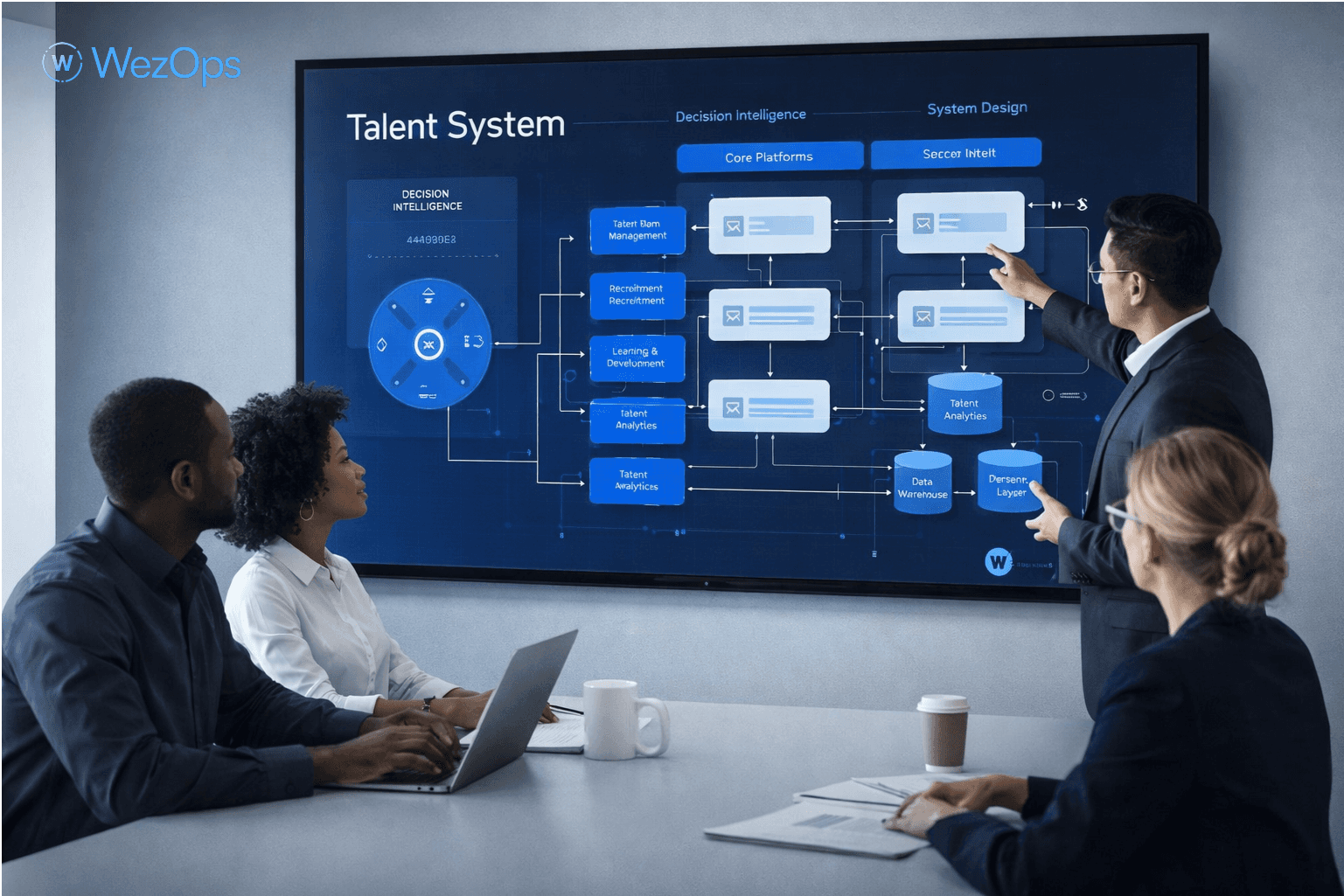
Essential HR Systems and Tools for TAaaS

The technology supporting talent acquisition as a service determines how well it works with your other HR operations. Deloitte's research on talent acquisition technology shows that 91% of business leaders expect productivity increases from AI-powered recruitment tools, highlighting the importance of modern HR systems.
Applicant Tracking Systems form your foundation. Modern ATS platforms like Greenhouse, Lever, or iCIMS keep all candidate information in one place and automate workflow steps.
Candidate Relationship Management platforms maintain lists of potential candidates, send automated follow-up messages, and track long-term engagement. CRM functions let you build talent pools before you actually need to hire.
Recruitment marketing tools support your employer brand and help attract candidates. Assessment and screening platforms add objective data to candidate evaluation through skills tests and structured interviews.
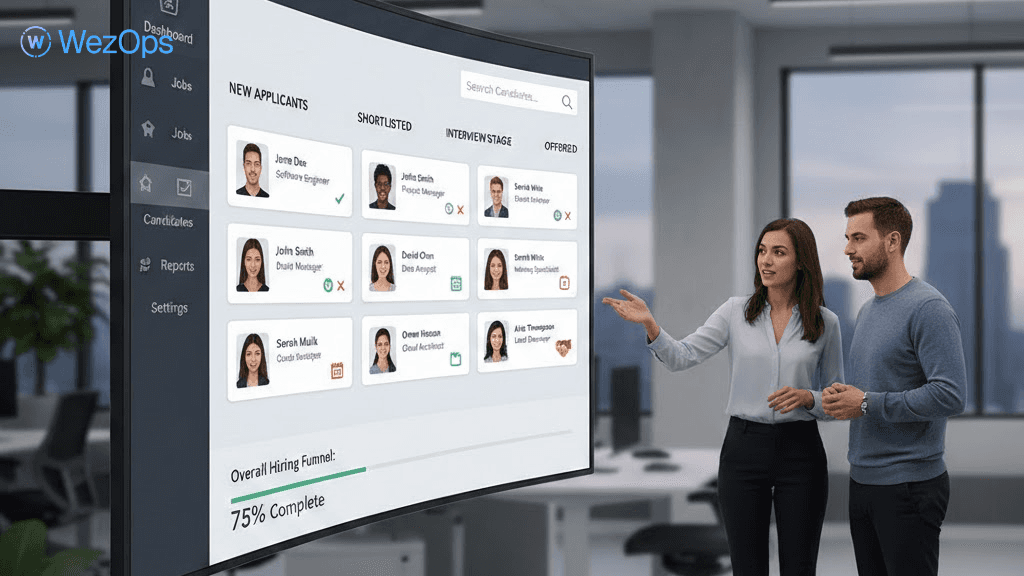
Analytics and reporting systems bring together data from all these tools. Dashboards track recruitment performance and spot opportunities to improve.
Before vs After: TAaaS Transformation
The change from traditional recruiting to talent acquisition as a service creates visible improvements.
Before TAaaS: Companies typically take 45-60 days to fill professional positions. Hiring managers submit job requests that sit waiting while busy HR teams juggle multiple priorities. You can't track what hiring actually costs.
After TAaaS: Time-to-fill drops to 25-35 days for similar jobs. Dedicated recruiters start searching immediately when you approve a position. Hiring managers get screened candidate lists within one week. Costs become predictable with known monthly or project fees.
Your talent team builds candidate pipelines before you need them. When you're ready to grow fast, qualified candidates already exist.
Common Implementation Mistakes to Avoid
Companies implementing talent acquisition as a service should avoid these three mistakes.
Poor system connections create unnecessary problems. When candidate data must be manually copied between tools, errors multiply and everything slows down. Invest in proper automated connections from the start.
Unclear success measures lead to mismatched expectations. Define specific, measurable goals before starting. Set concrete targets like "offer acceptance rate above 85%."
Wrong provider choice comes from inadequate research. Choose partners who understand your industry, company size, and culture. Focus on expertise and cultural fit alongside price.
Conclusion
Talent acquisition as a service changes hiring from reactive scrambling to strategic workforce development. The model gives growing organizations scalable recruiting ability that adjusts to changing business needs.
Success requires proper setup that integrates provider expertise with your existing HR systems and workflows. Start with clear objectives, choose partners carefully, and establish performance tracking that enables continuous improvement.
At Wezops, we partner with talent acquisition and HR teams to fix broken systems, automate workflows, and deliver measurable business impact. We specialize in ATS setup and optimization, HRIS configuration, workflow automation, and custom data analytics that transform how you hire.
Ready to enhance your talent acquisition as a service strategy? Schedule a 30-minute call with our team to discover how we can help you hire faster, reduce costs, and build a recruitment system that actually works.
FAQ
What is the difference between talent acquisition and recruitment?
Recruitment is the tactical work of filling current job openings. Talent acquisition is a strategic approach that includes planning for future workforce needs, building your employer brand, and developing talent pipelines. Talent acquisition as a service provides this strategic capability as an outsourced function.
How much does talent acquisition as a service cost?
TAaaS pricing depends on how many people you hire and what services you need. Common models include monthly fees from $3,000-$15,000, project-based fees for specific searches, or hybrid structures. Most providers cost 30-50% less than traditional agency fees per hire.
Is TAaaS suitable for small businesses?
Yes. Small businesses benefit greatly from TAaaS because it gives them professional recruiting ability without paying full-time salaries. Many providers offer flexible plans that grow with your company, making the service accessible to organizations with 10-50 employees.
Related Articles