Blog Article


Most companies believe they are data-driven in hiring because they "have an ATS." The dashboards look clean. The charts update. The reports export. Yet hiring outcomes feel inconsistent, slow, and political.
The uncomfortable truth: most ATS data is operationally misleading, not because teams are incompetent, but because ATS systems were not built for decision intelligence. They were built for record-keeping. Having data is not the same as having insight.
This article names three real problems with ATS data. Then it explains what AI for HR analytics actually changes; beyond buzzwords.
Why ATS Data Keeps Disappointing Leadership
ATS platforms were designed for compliance, process tracking, and record-keeping. They were not designed for judgment support or pattern detection. Most ATS metrics are lagging, contextless, and easily gamed.

TA teams get stuck defending numbers instead of improving outcomes. Executives get reports but lack confidence in decisions. This is not a tooling failure alone. It is a data model failure.
The result: organizations spend money on AI tools for HR but continue making decisions based on incomplete, biased, and retrospective information.
Problem 1: ATS Data Tells You What Happened, Not Why It Happened
Why Most ATS Reports Are Retrospective Theater
Time-to-fill, source-of-hire, pass-through rates; these are descriptive, not diagnostic. They describe outcomes without explaining causes. Teams argue over interpretations instead of fixing systems.
Real-world symptoms you will recognize:
"Source A performs better" without understanding why. Is it the candidate quality, the role type, or the hiring manager? Your ATS doesn't know.
Recruiters blamed for slow hiring when bottlenecks are approvals, scheduling conflicts, or interviewer delays. But your dashboard shows time-to-fill by the recruiter, so they take the heat.
Diversity metrics tracked without insight into drop-off causes. You see the funnel narrowing. You don't see where or why candidates disengage. Was it the job description? The first interview? Compensation transparency? No one knows.
If your data cannot tell you where to intervene, it is not operational data.
What AI Changes Here (And What It Does Not)
AI for HR analytics enables causal pattern detection across stages. It attributes bottlenecks: where candidates drop, why offers fail, and which interview loops create friction. It performs cross-variable analysis humans cannot scale manually.
What AI does not do:
It does not replace judgment. Leaders still decide. AI surfaces patterns; you choose what to do with them.
It does not make bad processes good. If your hiring process is fundamentally broken, AI will just help you break it faster at scale.
It does not remove accountability. In fact, it increases it by making invisible decisions visible.
The shift: from reporting outcomes to diagnosing systems. This is the only change that matters.
Problem 2: ATS Data Is Structurally Biased by Human Behavior
Why "Dirty Data" Is Not the Real Issue

Most ATS data problems are blamed on poor recruiter hygiene. That is lazy thinking. The real issue is behaviorally biased data entry.
Examples:
Stages updated late or retroactively. A candidate moves from "phone screen" to "offer" in the system, but in reality, they were in final rounds for three weeks. Your time-to-hire data is fiction.
Feedback written to justify decisions, not explain them. Interviewers select rejection reasons that are defensible, not accurate. "Not a culture fit" becomes code for "I had a bad day and didn't connect with them."
Reasons for rejection selected for convenience. Whatever dropdown option is fastest. Your data shows patterns that don't exist.
Hiring managers bypassing stages informally. Verbal offers made before formal approvals. Candidates moved forward without logged interviews. Your funnel metrics are useless.
Humans optimize for speed, safety, and optics. Your data reflects that, not the truth.
How AI Reframes Data Integrity Instead of Policing Humans
AI-powered recruitment platforms change this through passive data collection instead of manual updates. Pattern validation detects inconsistent behavior and flags anomalies automatically. Structure is enforced without friction: mandatory evidence-based feedback, time-stamped process tracking, separation of signal from noise.
Key insight: AI improves data quality by reducing human burden, not increasing control. The moment you treat ATS data entry as a compliance checkbox, you lose data integrity. AI tools for HR work when they make accurate data entry easier than inaccurate data entry.
Problem 3: ATS Data Is Siloed from Business Outcomes
Why Hiring Data Lives in a Vacuum

ATS data rarely connects to performance, retention, team productivity, or revenue impact. Hiring success is judged inside the funnel, not after it.
Consequences:
"Great hire" is defined by speed, not impact. A role filled in two weeks is celebrated. Six months later, that hire churns or underperforms. No one connects the dots.
No learning loop between hiring and business performance. You keep hiring the same profiles that fail. You keep using the same interview questions that don't predict success. Nothing improves because nothing is measured beyond the offer letter.
TA operates defensively instead of strategically. When hiring is judged by activity metrics, TA leaders optimize for volume and speed. When it's judged by business outcomes, they optimize for quality and fit. Your ATS determines which game you play.
If hiring data ends at the offer letter, you are flying blind.
What AI Changes When Hiring Data Meets Business Reality
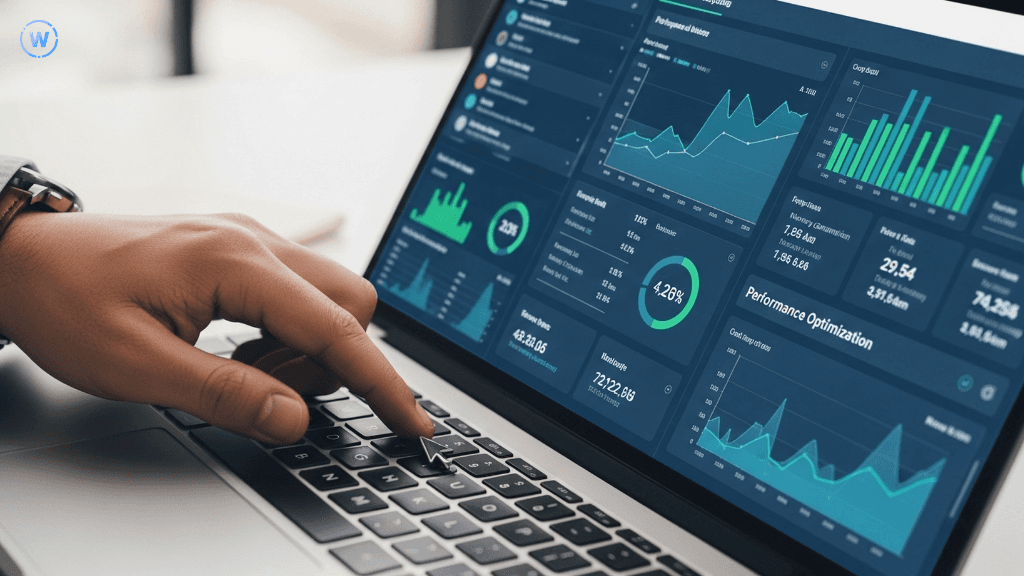
AI's real leverage point: linking hiring patterns to downstream outcomes. Identifying which profiles succeed, which interview signals matter, which hiring managers consistently misjudge. Turning ATS data into organizational learning, not reporting.
Example: an AI for HR analytics system connects interview scores to six-month performance reviews. It discovers that candidates who scored high on "cultural alignment" but low on "technical depth" consistently underperform in their engineering roles. Your hiring managers are optimizing for likability, not capability. Without AI, this pattern stays invisible for years.
The shift: from activity metrics to business intelligence.
The Uncomfortable Truth Executives Need to Hear
Buying an ATS does not make you data-driven. Adding AI does not fix broken accountability. Hiring systems reflect leadership discipline.
AI exposes weak decisions faster than humans do. If your hiring strategy is inconsistent, AI will surface that inconsistency in weeks, not years. If your interview process is biased, AI will quantify that bias. If your hiring managers ignore evidence, AI will document it.
AI will not protect you from bad hiring strategies. It will make it visible.
This is uncomfortable for many executives. It is also clarifying. The organizations that benefit most from AI-powered recruitment platforms are those willing to act on what the data reveals.
What a Realistic AI-Enabled ATS Future Looks Like
Not futuristic promises. Practical shifts only: fewer dashboards, better questions. Instead of fifty metrics updated weekly, you have five that matter, updated in real time, and directly tied to decisions.
Fewer metrics, stronger signals. Time-to-fill becomes "time spent in each stage with attribution." Source-of-hire becomes "source effectiveness by role type and hiring manager." Pass-through rates become "candidate drop-off points with probable causes."
TA teams acting as system designers, not report generators. Recruiters spend less time updating stages and more time analyzing patterns. TA leaders present intervention strategies, not activity summaries.
Leaders asking where to intervene, not what went wrong. The conversation shifts from blame to design. "Why did this hire take twelve weeks?" becomes "What specific bottleneck extended this hire, and how do we remove it?"
The Real Decision in Front of Hiring Leaders
You can keep exporting ATS reports and debating them. Or you can redesign how insight is created.
The value of AI in hiring is not automation. It is clear. Clarity about what works, what doesn't, and why. Clarity about where to intervene. Clarity about which decisions are being made on evidence and which are being made on instinct dressed up as data.
What decisions are you making today based on data that cannot explain itself?
If you cannot answer that question confidently, your ATS is part of the problem, not the solution.
Related Articles