Blog Article


The real problem is not "lack of candidates." It is wasted motion.
Most hiring teams are still running manual workflows in a world that already moved on. Talent Acquisition keeps getting blamed for outcomes that are actually process failures. So let's ask the uncomfortable question: if AI is "everywhere," then why are recruiters still doing admin work like it's 2014?
This is not a futuristic piece. This is about what AI should own right now.
The cost is obvious: time, speed, quality, employer brand. What executives need to understand is that these aren't technology problems anymore. They're decisions. Bad ones.
AI Is Not Your Strategy
Let's be direct: AI will not fix a broken hiring model. If your intake process is chaotic, your scorecards are inconsistent, and your hiring managers refuse structure, AI becomes expensive noise.
What AI can do extremely well: handle repeatable, high volume, rule based ops tasks. What humans must own: judgment, relationship building, hiring decisions, culture calibration.
The real target here is Talent Ops, not "AI replacing recruiters." If your recruiters spend more time pushing data than influencing decisions, you're under automated. That's the line executives need to remember.
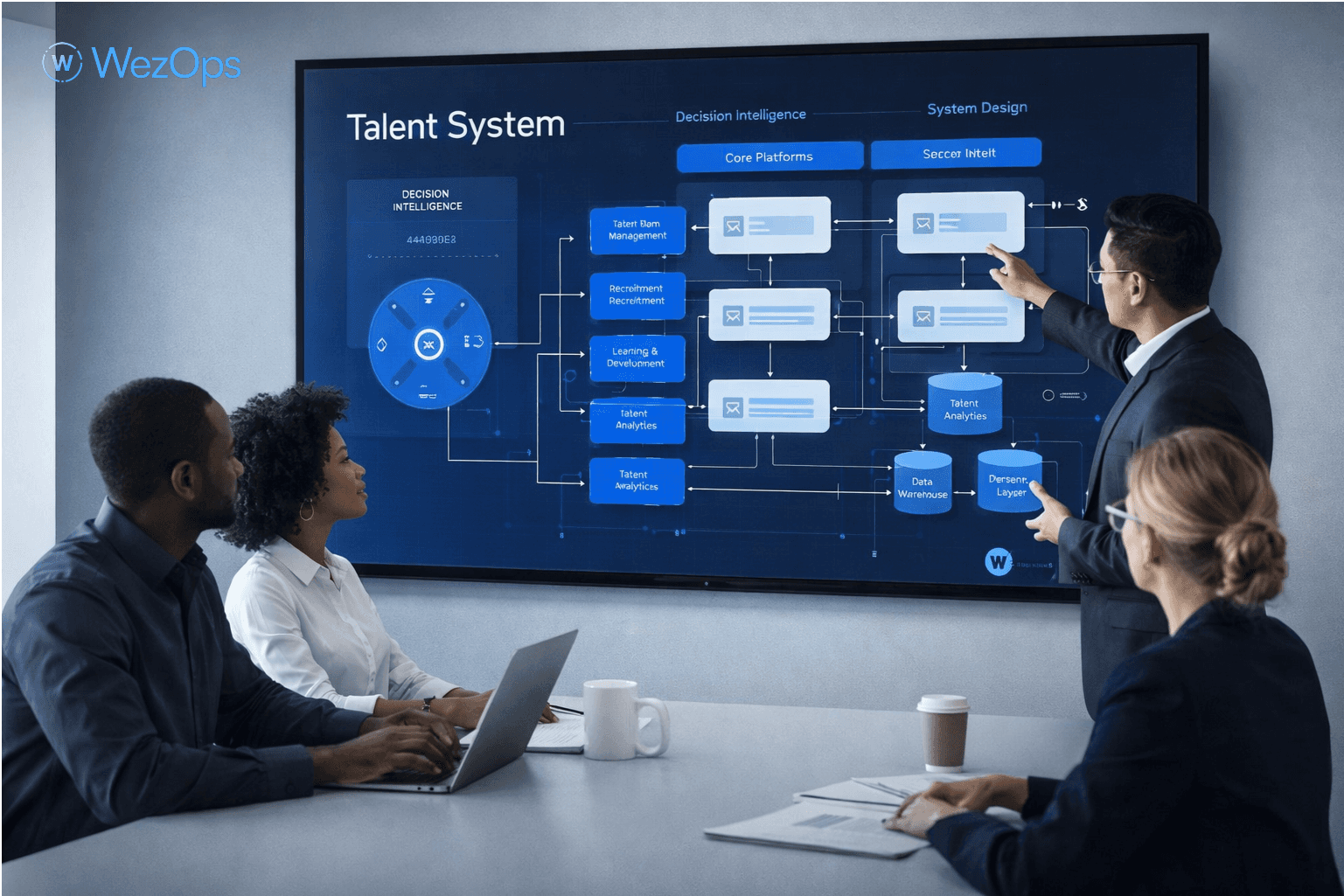
AI for talents Ops is about upgrading the operating system, not replacing the operators. When we talk about talent acquisition and recruitment in 2026, we're talking about infrastructure , not innovation theater.
The Standard You Should Demand from AI in TA Ops
Before we walk through the five tasks, define the performance bar. AI in talent acquisition should deliver:
Accuracy with audit trails. No black box decisions. Every recommendation, every flag, every automation should be explainable.
Consistency across roles, regions, and requisition types. Your AI should produce the same quality output whether it's processing a software engineer req in Austin or a compliance analyst in Singapore.
Integration with ATS software and HRIS. Not another disconnected tool. If it doesn't live inside your workflow, it creates more work.
Measurable impact. Time to shortlist. Speed to interview. Offer acceptance. Quality indicators. If it cannot prove value in your funnel, it's noise.
Now let's talk about what AI should actually own.
Task #1: Intake Discipline and Role Calibration
The problem reality:
Hiring intake is often vague, political, or rushed. Recruiters inherit confusion and get judged for it later. A hiring manager says "senior" but means "cheap." They say "urgent" but won't make time for interviews. They want "niche expertise" but can't define it. The req gets approved anyway, and TA Ops becomes the scapegoat when nothing closes.
What AI should own:
Turn messy intake notes into a structured req brief. The AI should extract and organize:
Must haves versus nice to haves. Target companies and adjacencies. Realistic compensation bands based on internal ranges plus market signals. An interview plan outline showing stages, scoring, and decision owners.
More critically, AI should detect contradictions. When a hiring manager says "senior, niche, urgent, cheap," the system flags it. It generates a calibration checklist they cannot skip. It doesn't let the req go live until the conflicts are resolved.
How it works inside ops:
Prompted intake forms feed AI summarization, which feeds an approval workflow. The system automatically assigns a "risk rating" for each req based on hard to fill signals: narrow talent pool, misaligned comp, unrealistic timeline, vague success criteria.
What humans still own:
Final decision on trade offs and the definition of success. TA Ops AI doesn't make hiring strategy , it makes strategy enforceable. This is where talent acquisition and recruitment stops being reactive and starts being accountable.
Task #2: Job Description and Employer Narrative Production
The problem reality:
Job descriptions are either copy pasted from 2017 or written like legal disclaimers. Top candidates read your job description and feel nothing. Worse, they read five job descriptions from your company and see five different brands, five different tones, and five different promises. There's no consistency, no story, no reason to care.
What AI should own:
Produce multiple job description versions by persona. A performance driven version for operators. A mission driven version for builders. An internal mobility version for current employees. Strip bias and empty clichés automatically, no more "rockstars" or "fast paced environments."
AI should also create consistent employer narrative blocks:
"What success looks like in 90 days." "What this team values." "How you will be measured."
And it should localize job descriptions without losing the role of truth. A Berlin job description shouldn't read like it was translated by a bot from a Bay Area template.
The ops angle:
Brand consistency across departments. Faster go live time without sacrificing quality. When AI and talent acquisition work together, you get both speed and substance.
What humans still own:
Authenticity check. The question recruiters should ask: "Is this who we really are, or marketing fiction?" AI recruiting tools can write beautiful copy. Humans decide if it's honest.
Task #3: Sourcing Operations and Pipeline Shaping
The problem reality:
Sourcing is treated like volume. It's actually precision. Recruiters waste hours on Boolean experiments, duplicate profiles, irrelevant "almost fits," and stale pipelines that were built six months ago for a different role. The work is repetitive, the quality is inconsistent, and nobody tracks what actually converts.
What AI should own:
Translate the calibrated req into sourcing maps. Likely titles plus adjacent titles. Skill clusters plus proxy signals. Location realism and remote constraints.
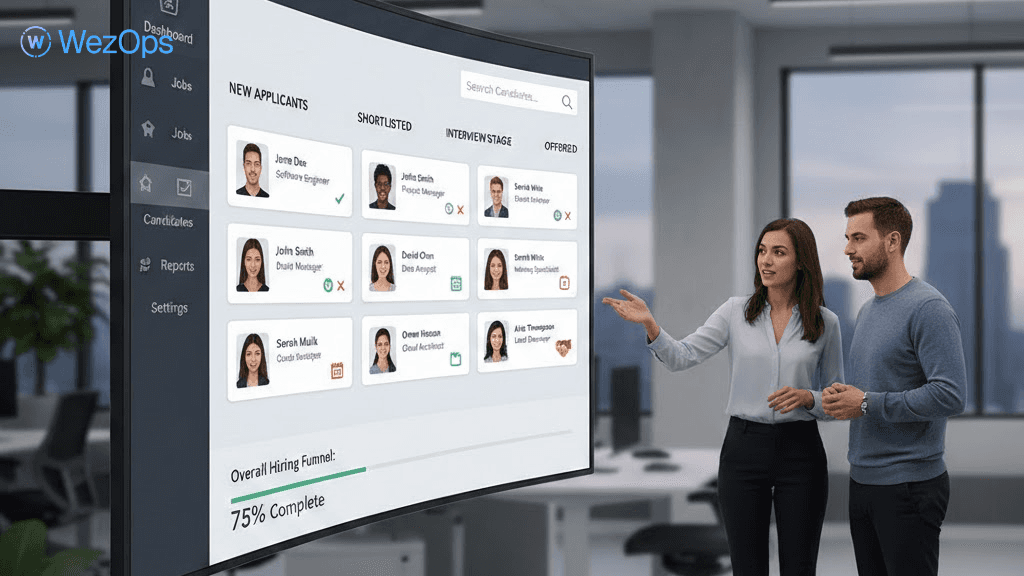
AI should identify "best next pools" from your existing ATS, CRM, and past silver medalists. It should deduplicate candidates across channels automatically. And it should score candidates against the role brief with explainable reasons , not vibes.
Then it should create weekly pipeline health reports showing:
Pass through rates by stage. Drop off points. Diversity mix where legal and appropriate. Time in stage bottlenecks.
The ops angle:
AI becomes the pipeline operator. The recruiter becomes the closer. This is the shift that matters. When AI recruiting handles the mechanics, humans can focus on persuasion, relationship building, and candidate trust.
What humans still own:
The conversation. The pitch. The trust. Your ATS software can tell you who to call. Only a human can make them want to answer.
Task #4: Screening Logistics and Structured Evaluation Support
The problem reality:
Screening is overloaded with admin. Scheduling chaos. Repetitive questions. Feedback that comes late or barely exists. Interviewers are inconsistent, then teams argue in debrief because nobody used the same criteria. The process looks professional from the outside, but internally it's held together with email threads and hope.
What AI should own:
Automated scheduling with constraints and priorities. Role based structured screens with consistent question sets aligned to competencies and dynamic follow ups based on responses.
Real time interview kits: scorecards per interviewer, guidance on what to probe based on candidate background, and reminders tied to the role brief.
Feedback enforcement: no submission, no next interview invite. Prompts that force evidence , "What did they do? What did they say?" , instead of vague ratings.
The ops angle:
This is where AI improves quality, not just speed. When AI and talent acquisition work together on structured evaluation, you get better signals, faster decisions, and fewer regretted hires. This is also where talent acquisition and recruitment stops being a coordination nightmare and starts being a decision engine.
What humans still own:
Decision making and nuance, especially for borderline candidates. AI can tell you someone scored a 3 out of 5 on "strategic thinking." Only a human can tell you if that's disqualifying or developable.
Task #5: Offer Operations, Closing Intelligence, and Post Process Learning
The problem reality:
Offers fail because teams treat closing like paperwork. Approvals take too long. Comp discussions happen in silos. Recruiters find out about counter offers after they've already been accepted. And worst of all, most organizations don't learn from declines, dropouts, compensation friction, or slow approvals. They just move on to the next req and repeat the same mistakes.
What AI should own:
Offer workflow automation: approvals, comp alignment, internal parity checks, timeline monitoring, and escalation.
Candidate closing intelligence: likely objections based on similar profiles, suggested talking points for recruiter and hiring manager, counter offer readiness checklist.
"Win loss" analysis after each close: why candidates accepted or declined, process delays that killed acceptance, role messaging mismatches.
Monthly hiring performance insights: which roles stall and why, which interviewers cause drop offs, which sources deliver quality hires.
The ops angle:
AI becomes your continuous improvement engine. Every offer becomes a data point. Every decline becomes a lesson. TA Ops AI doesn't just close reqs , it makes your hiring process smarter over time. This is where ATS software stops being a database and starts being a decision support system.
What humans still own:
The actual conversation that builds commitment. The call where you address their spouse's concern about relocation. The negotiation where you explain equity structure. The moment where you sell vision, not just comp. That's human work. Everything leading up to it should not be.
Why Most Teams Still Haven't Done This
Let's call out the real blockers.
Tool sprawl and "pilot fatigue." Your team has tried six AI tools in three years. None of them stuck because none of them integrated. Now everyone's tired of "innovation."
Fear of compliance and risk, used as an excuse for inaction. Yes, AI introduces new considerations. But manual processes introduce more risk, bias from inconsistency, legal exposure from poor documentation, and talent loss from slow, broken processes.
Hiring managers refusing structure. They say "I know it when I see it" and treat intake forms like suggestions. Until leadership holds them accountable, AI can't fix what's fundamentally a culture problem.
TA being measured on speed but not given operational authority. You're told to "move faster" but not allowed to enforce scorecards, decline bad reqs, or automate approvals. That's not a performance problem. That's an authority problem.
Misunderstanding what AI actually means. Most teams think AI means "chatbots." It doesn't. AI for talents Ops means operating system upgrades , workflow automation, decision support, continuous learning. If you're still thinking about AI as a widget, you're solving the wrong problem.
These are real obstacles. But they're not reasons to stay stuck.
What to Do Next: A Practical 30 Day Adoption Plan
Make it executive ready and action first:
Week 1: Map workflows. Identify your top 10 time wasters. Pick 2 to automate.
Week 2: Tighten intake and scorecards. Standardize role briefs. Stop letting bad reqs go live.
Week 3: Integrate with ATS software. Enforce feedback rules. No scorecard, no next step.
Week 4: Measure impact. Time to shortlist. Stage conversion. Offer acceptance. Show the numbers to leadership.
Do not buy AI to "innovate." Buy AI to delete busywork. That's the strategy.
The Final Hard Truth
AI in TA is not about replacing people. It's about stopping expensive humans from doing cheap tasks.
If your TA team is drowning, you don't need more recruiters first. You need cleaner operations first. You need AI for talent Ops that actually works, integrated, measurable, enforceable. You need talent acquisition and recruitment built on infrastructure, not heroics.
The five tasks we've covered , intake discipline, job description production, sourcing operations, screening logistics, and offering intelligence , are not the future. They're table stakes. If you're still doing these manually, you're paying premium rates for commodity work.
So here's the direct challenge:
Which of these five tasks are you still paying humans to do?
Related Articles