Blog Article


If your company uses AI to screen resumes, rank candidates, or schedule interviews, and you haven't looked at your compliance posture lately, you're already behind. That's not alarmist. It's where things stand as we head into 2026.
AI hiring regulations now span New York City to the EU, covering transparency, bias auditing, and candidate rights, with real financial penalties attached. Some fines are already in the six-figure range.
The organizations that will navigate this well aren't the ones with the most sophisticated tools. They're the ones who understand what those tools are doing and can prove it.
What's Changing in 2026: The Regulatory Snapshot

The global regulatory picture for AI in hiring has shifted fast. What used to be a patchwork of guidelines is becoming enforceable law. Here are the key frameworks shaping AI compliance 2026:
New York City Local Law 144 is already in effect. It requires employers using automated employment decision tools (AEDTs) to run annual independent bias audits, publish those results publicly, and notify candidates before any AEDT evaluates them. Non-compliance can result in fines of up to $500- $1,500 per violation per day.
The Illinois AI Employment Act prohibits the use of discriminatory proxy measures such as ZIP codes in AI-driven hiring evaluations and requires employers to be upfront about when and how AI is used. The responsibility sits with employers, not just vendors.
The EU AI Act classifies AI hiring tools as "high risk" and requires conformity assessments, ongoing monitoring, and detailed documentation. Enforcement was originally set for August 2026, with a potential delay to 2027 via the Digital Omnibus Act, but if you have EU operations, waiting isn't a strategy.
Colorado's AI Act mirrors the EU's risk-based approach and assigns responsibility to both AI tool developers and employers using them. Several other states, such as Texas, Virginia, and Maryland, have similar bills moving through their legislatures.
Key insight: These regulations don't prohibit AI in hiring. They require employers to explain what their tools do, prove they're fair, and document everything.
Key Compliance Requirements by Jurisdiction

The specifics vary, but most AI hiring regulations share the same core obligations:
Candidate notification: Candidates must know when AI is being used to evaluate them, before it happens.
Opt-out or alternative paths: Employers must offer an alternative process for candidates who aren't comfortable with AI evaluation, or who need accommodations.
Bias auditing: AI hiring tools must be audited regularly for disparate impact across race, gender, age, disability, and other protected groups.
Public disclosure: In jurisdictions such as NYC, audit results and the types of data AEDTs use must be publicly disclosed.
Vendor accountability: Saying "our vendor handles it" isn't enough. Employers are increasingly held responsible for how their AI tools perform.
Global hiring adds more layers. Singapore and China have both developed AI governance frameworks, each with a different approach. If you're hiring across APAC, those requirements stack on top of everything else.
What TA Leaders Need to Audit Right Now
Compliance isn't a one-time project, but it does have a clear starting point.
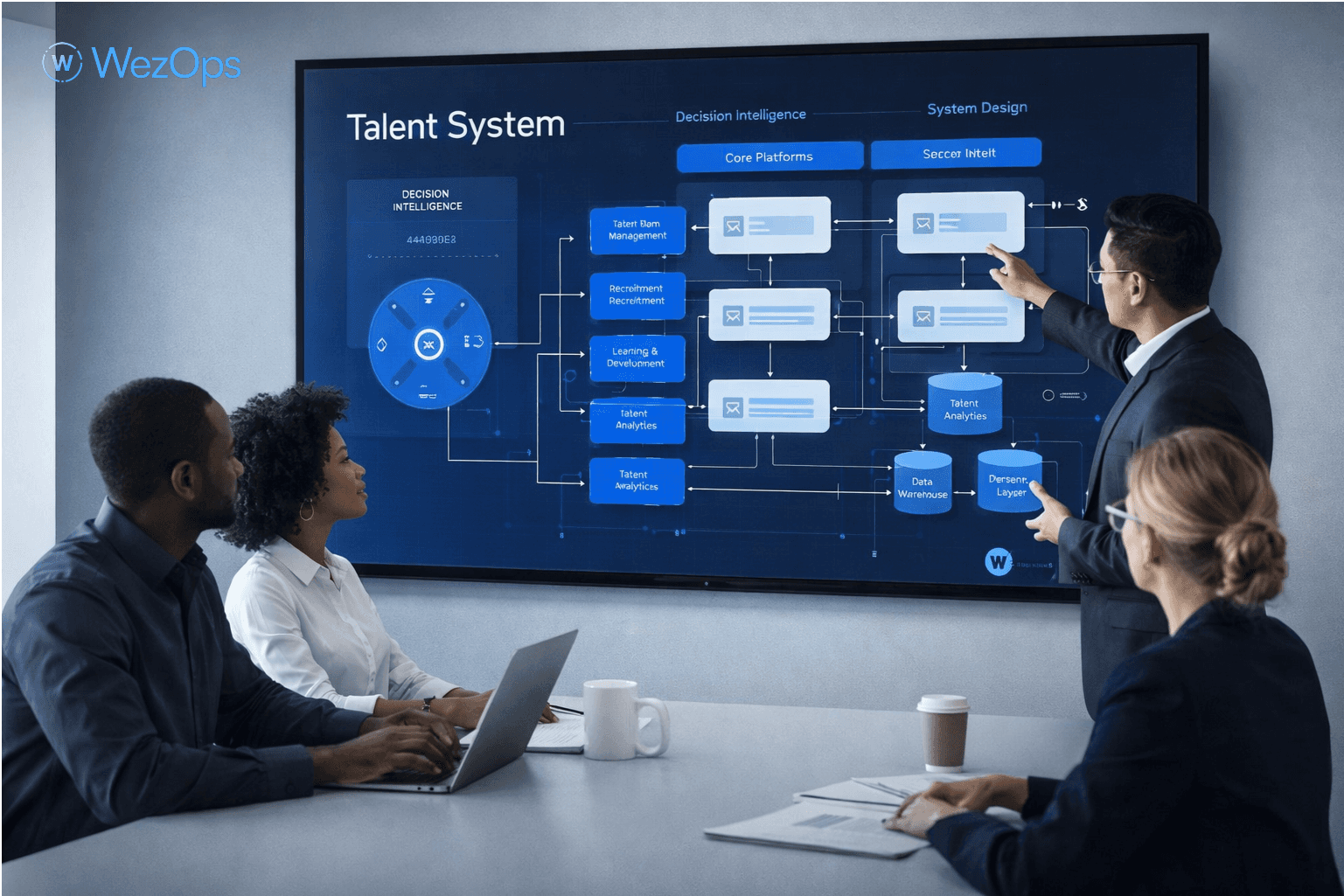
Know every AI tool in your hiring stack: Resume screeners, scheduling bots, video interview scoring tools, and candidate chatbots. Each of these may qualify as an AEDT under relevant law. Pull together a full inventory of your AI recruitment tools and AI interview tools, what each one does, and what decisions it influences. If you don't already have a centralized talent operations dashboard that your compliance team can access and audit, that's your first infrastructure gap.
Review vendor documentation: Ask your AI vendors for their bias audit results, data handling practices, and compliance records. Reputable vendors are building these into their offerings. If a vendor can't show you how their model was trained, what data it was trained on, and how disparate impact is monitored, that's a red flag.
Check your candidate-facing disclosures: Walk through your candidate experience with fresh eyes. Is AI use disclosed clearly before candidates encounter it? Is there a working opt-out path? Is the language plain enough that a regular person would actually understand it?
Assess your team's readiness: Compliance lives in how your hiring managers and TA teams use these tools day-to-day. Without real AI fluency in HR, your team may be creating liability without knowing it. Your AI skills gap is a compliance gap, and closing it is one of the highest-leverage moves you can make right now.
Documentation & Transparency Requirements

In 2026, documentation is your primary proof of compliance. Here's what that looks like in practice:
Job-relevance records: Every AI assessment must be tied to competencies explicitly required for the role. This is a foundational principle in industrial-organizational psychology, and it's now a legal requirement in many jurisdictions.
Audit trails: Maintain records of AI evaluations, the criteria used, and outcomes, especially where AI recommendations influenced hiring decisions. This is especially critical under FEHA in California.
Model documentation: For high-risk tools under the EU AI Act, you'll need records of how models were trained, what data was used, and how they're monitored for drift or bias.
Candidate rights logs: Document notifications sent, opt-out requests received, and accommodations provided.
Vendor contracts: Ensure that agreements include explicit compliance obligations, audit rights, and data handling requirements.
When AI in hiring is implemented properly, it tends to produce better documentation than human-led processes. When a hiring manager passes on a candidate, you might get a sticky note. When an AI tool does the same, you can have a complete audit trail. That's a compliance advantage if you build for it. It's also why AI for candidate and TA professionals, done right, supports both speed and defensibility.
Implementation Roadmap
Immediately (Q1 2026)
Build a complete inventory of every AI tool in your hiring process
Request compliance documentation and recent bias audit results from all vendors
Review candidate-facing disclosures for clarity and legal completeness
Map your active hiring jurisdictions to their applicable regulations
Short-term (Q2 2026)
Commission bias audits for any AEDTs not audited in the last 12 months
Update documentation protocols for AI-informed hiring decisions
Build opt-out and alternative assessment paths into your candidate workflow
Run AI fluency training for TA and HR managers
Ongoing (Q2 2026 and beyond)
Schedule annual bias audits and document results consistently
Monitor state and international regulatory developments, as this is moving fast
Embed AI governance into your HR policy framework
Revisit your AI hiring stack whenever you bring on new tools or change vendors
FAQs About AI Hiring Compliance for 2026
What is AI hiring compliance, and does it apply to my company?
AI hiring compliance covers the legal and ethical obligations employers carry when using AI or automated tools in the hiring process. If you use any tool, even a third-party platform that screens, scores, or ranks candidates using algorithms, you're likely subject to regulation, particularly if you hire in NYC, Illinois, Colorado, or the EU. So the short answer is that if you use AI in hiring and have candidates in regulated jurisdictions, it applies to you.
Our AI vendor says they handle compliance. Is that enough?
No, and this is one of the most common misconceptions we see. Vendors can provide documentation and audit support, but under most current AI hiring regulations, the employer is the "deployer", and the deployer carries compliance responsibility. You need to understand what your tools are doing, maintain your own records, and ensure your candidate-facing processes meet legal requirements. A good vendor makes this easier. But the responsibility doesn't transfer to them.
How do we get started if we don't have a formal AI compliance program?
Start with visibility. You need a clear picture of every AI tool in your hiring process and what it's doing. A talent operations dashboard is often the right first infrastructure move, one place for your team and compliance function to see everything, including vendor documentation, candidate disclosures, jurisdiction mapping, and bias audits. If your team isn't equipped yet, start with an honest look at your AI skills gap and build from there.
Related Articles