Blog Article

Artificial intelligence is no longer a future concept in talent acquisition. It's already reshaping how candidates apply and how hiring teams operate.
A recent LinkedIn report highlights how AI is moving from a “nice-to-have” experiment to a strategic layer embedded across sourcing, screening, and decision-making. For TA leaders, the conversation is no longer if AI will impact hiring, but rather how to use it responsibly without losing the human edge.
Meanwhile, candidates are adopting the same tools recruiters use, which means hiring is no longer a one-sided system. Instead, it has become an evolving interaction between two groups navigating the same technology.
AI In Changing Candidate Behaviour
Candidates are no longer passive participants in hiring. Increasingly, they are using AI to refine resumes, prepare for interviews, and understand how their skills align with roles. Employ’s Job Seeker Nation Report in 2025 shows that roughly one in three candidates already use AI tools during their job search, reflecting a growing comfort with technology on the applicant's side.
However, this shift is not simply about convenience. Candidates are responding to a hiring landscape that feels more complex and competitive. LinkedIn data suggests that more than half of professionals are considering new roles while many feel unsure how to stand out, which naturally pushes them toward tools that promise clarity and structure.
Because of this, resumes, portfolios, and even communication styles are becoming more polished and more uniform. As a result, the early stages of the talent acquisition process are evolving from simple screening toward deeper evaluation. Recruiters are spending more time understanding intent, context, and long-term potential. The question is no longer “Did the candidate use AI?” but “What does strong judgment look like in an AI-assisted world?”
AI In Reshaping the Recruiter’s Role
While candidates are using AI to navigate hiring, recruiters are using it to rethink how they spend their time. The biggest change is not speed alone. Instead, AI is slowly shifting recruiters away from repetitive execution toward higher-value decision-making.
Across many organizations, AI tools are already helping identify overlooked talent and reduce manual screening. LinkedIn reports that a majority of recruiters plan to increase their use of AI, particularly for sourcing and early evaluation, because it helps surface candidates they might not have discovered otherwise.
At the same time, this evolution is pushing TA professionals into more strategic territory. Rather than acting as coordinators, they are becoming advisors to hiring managers, translating insights from people analytics and hiring data into actionable decisions.
AI Recruitment Is Moving From Automation to Talent Strategy

Early conversations around AI recruitment often focused on automation: faster screening, quicker outreach, or more efficient job descriptions. While those benefits still matter, many senior leaders now see AI as part of a broader operating system for talent acquisition and HR ops.
Research shows that recruiters using AI can reclaim significant portions of their workweek, which allows them to focus on relationship building and long-term workforce planning. This shift explains why conversations about AI are increasingly tied to topics like top ATS platforms, integrated workflows, and AI for HR analytics rather than isolated tools.
Yet this evolution introduces a new risk. When AI becomes embedded across sourcing, assessment, and reporting, hiring outcomes begin to reflect the structure of the systems behind them. If those systems are fragmented, AI simply accelerates existing inefficiencies instead of solving them.
AI Is Exposing System Gaps in Talent Acquisition
Many talent leaders initially expect AI to fix bottlenecks in hiring. Instead, it often reveals deeper structural issues within the talent acquisition process itself.
For example, when AI surfaces more candidates faster, hiring managers may struggle with decision fatigue. Similarly, when automated workflows speed up outreach, organizations may discover that their interview frameworks were never designed for scale. These are not technology failures; they are operational gaps that existed long before AI entered the picture.
This is why discussions around AI frequently intersect with people analytics and organizational design. AI highlights patterns that were previously invisible, such as inconsistent evaluation criteria or misaligned expectations between HR and business leaders. Once those patterns become visible, the conversation naturally shifts from tools to operating models.
AI Adoption Requires a New Relationship Between Candidates and TA
The more AI streamlines communication, the more valuable genuine human interaction becomes. Senior TA professionals are already noticing that meaningful conversations, rather than transactional updates, are becoming the differentiator in candidate experience.
Because of this, the future of AI for talent acquisition is less about replacing human judgement and more about protecting it. The organizations that succeed will be the ones that use AI to remove noise from the process, allowing recruiters to focus on alignment, culture, and long-term potential.
The Human Advantage in TA
Despite rapid innovation, the evolving role of AI ultimately brings hiring back to a familiar principle: people trust people, not systems. AI may surface insights or accelerate workflows, but it cannot replace the strategic thinking required to evaluate talent in context.
As candidates become more sophisticated in how they present themselves, and as recruiters gain access to deeper analytics, the hiring process becomes more nuanced rather than more automated. This is why many experienced talent leaders are shifting their focus away from individual tools and toward how AI fits into the larger ecosystem of talent acquisition and HR ops.
In the coming years, the organizations that thrive will likely be those that treat AI not as a shortcut, but as an amplifier of strong hiring practices.
The Future of Talent Operations
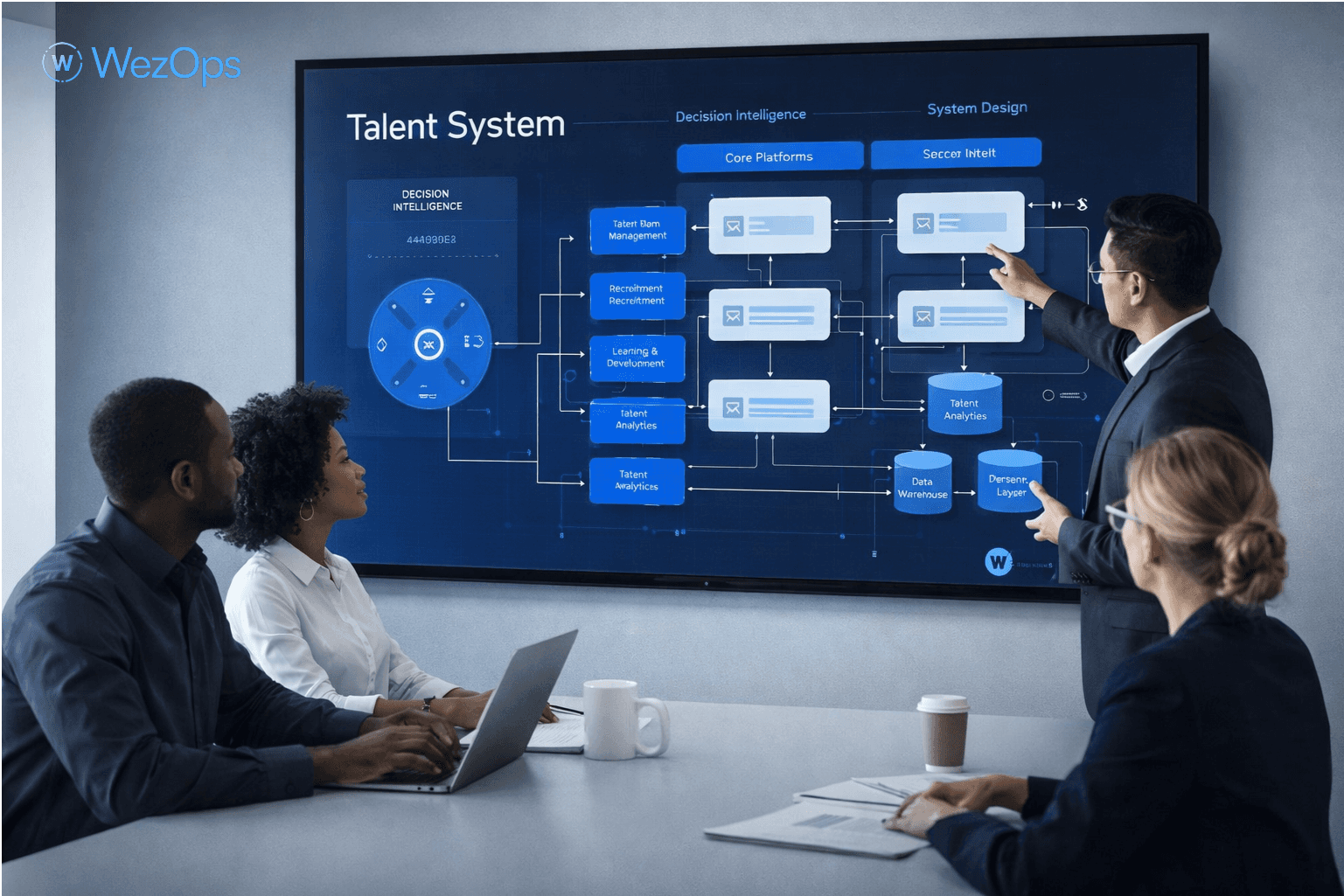
As AI adoption accelerates, the distinction between talent acquisition and HR operations is becoming less defined. Hiring decisions are increasingly connected to workforce planning, skills strategy, and organizational analytics. This is where AI begins to influence not only recruitment outcomes but broader business performance.
The question that many leadership teams are asking is how AI fits within a unified talent operations strategy that includes analytics, systems integration, and long-term planning.
Wezops works with organizations navigating exactly this shift. Rather than approaching AI as a standalone hiring solution, our focus is on aligning technology, process, and people within a cohesive talent operations model.
This perspective helps senior HR leaders move beyond experimentation and toward sustainable adoption, ensuring that AI strengthens decision-making instead of complicating it.
FAQs About AI for TA and Candidates
How is AI changing the role of recruiters?
AI reduces repetitive administrative work, allowing recruiters to focus more on strategy, candidate relationships, and workforce planning rather than manual screening.
How are candidates using AI in the hiring process today?
Candidates are increasingly using AI to refine resumes, prepare for interviews, research companies, and tailor applications to specific roles. While this helps them present their experience more clearly, it also means recruiters are placing more emphasis on authentic conversations, real-world examples, and consistent career narratives rather than polished wording alone.
Does AI improve hiring quality or just speed?
While many organizations adopt AI to reduce time-to-hire, data shows it also helps identify hidden skills and improve talent matching when used alongside structured evaluation methods.
What should CHROs consider before expanding AI in hiring?
Leaders should look beyond tool adoption and focus on governance, transparency, and how analytics connects with broader HR operations. Alignment across the talent acquisition process often matters more than automation alone.
Related Articles