Blog Article
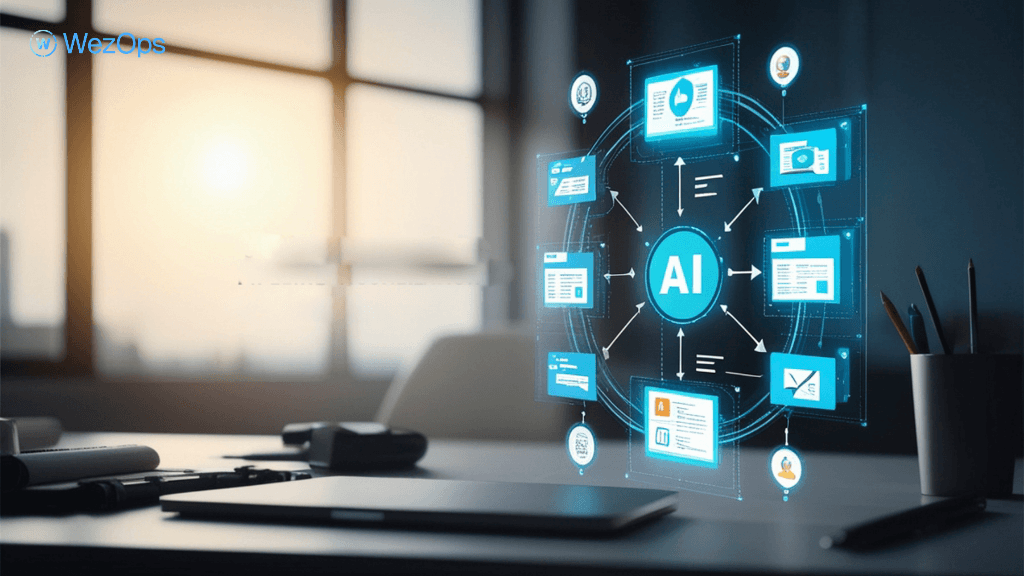

The AI skills gap in HR isn't about whether you can log into ChatGPT or if your company bought AI recruitment tools. It's about whether you can produce outputs that don't require complete rewrites, understand when automation creates more risk than it solves, and whether you're building capabilities that make you indispensable as AI handles more of what used to justify your headcount.
HR leaders estimate that generative AI will impact 37% of the workforce in the near future, and if you're in that 37% without the skills to work alongside these systems rather than be replaced by them, your professional relevance is on a timer you can't see.
The Three AI Capability Gaps That Cause AI Skills Gap
The AI skills gap is the difference between having access to AI tools and knowing how to use them confidently, safely, and effectively in everyday HR work, and that gap shows up in three distinct ways that compound quickly if you don't address them.
Competence gaps: This appears when your outputs are inconsistent and you don't know why. You're using vague prompts that produce generic content requiring complete rewrites, you can't validate whether AI outputs are accurate or complete so you either trust them blindly or avoid them entirely, and you lack repeatable workflows so every AI task feels experimental and wastes time instead of saving it.
Confidence gaps: This shows up as either AI avoidance or dangerous overreliance. You only use AI for low-stakes tasks like email rewrites, which stalls your learning and prevents you from building the judgment you need for higher-value applications, or you accept outputs at face value and move too quickly without exercising professional judgment, only discovering later that tone, logic, fairness, or context was off in ways that created problems.
Clarity gaps: This emerges when you don't know what's allowed and how to stay compliant. You paste performance review notes or identifiable employee data into public AI tools because nobody taught you what constitutes safe inputs, you use AI to influence sensitive decisions without clear human oversight or documentation, and you can't articulate governance boundaries because your organization hasn't established them and you haven't created your own.
Irreplaceable AI Skills HR Leaders Should Have
As AI automates more routine work, demand for multiskilled, judgment-heavy roles that combine business insight, ethics, and technology fluency will increase. The real AI skills gap doesn't come from knowing specific top ATS platforms or AI recruitment tools as those change constantly. It comes from understanding when to trust AI recommendations and when to override them, how to design systems that amplify human judgment rather than replace it, and possessing durable capabilities that technology can't replicate regardless of sophistication.
Technical AI Skills for HR Practitioners to Have
Prompt Engineering: The ability to design clear, structured, context-rich prompts that guide AI toward accurate, relevant outputs. You can apply this when drafting job descriptions, policy documents, or candidate communications. The result is first drafts requiring minimal editing rather than complete rewrites, saving hours while maintaining quality standards.
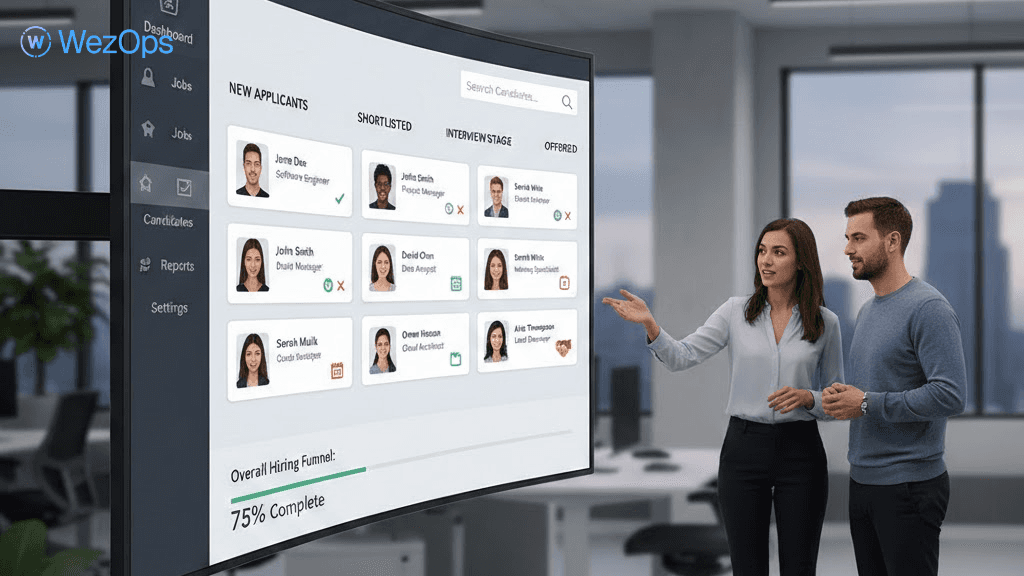
AI Tool Application: Using AI-enabled HR tools through structured workflows, feedback loops, and proper data inputs to improve speed and scale. This can be used when screening applications through your ATS, summarizing survey results in your people analytics stack, or generating workforce insights from your HRIS. The result is faster outputs that meet HR quality standards without constant rework.
Output Validation: Building habits to review AI outputs critically, checking assumptions, testing logic, and using human judgment to keep automation in check. Apply it by reviewing for accuracy, missing details, bias, privacy risks, and alignment with company policy before sharing anything externally. The result is catching errors before they create compliance exposure or damage stakeholder trust.
AI Solution Design: Identifying HR issues and co-designing AI-enabled solutions that meet data, process, and business needs. Apply it when building automated employee onboarding journeys, configuring AI recruitment tools for your hiring process, or designing talent automation workflows. The result is stakeholders seeing clear value beyond just speed improvements.
Digital HR Governance: Establishing guardrails for HR technologies to ensure privacy, security, and compliance. Apply it by defining what data your team can and cannot input into AI tools, setting clear boundaries around sensitive employee information, and creating protocols for AI for HR analytics. The result is your team's AI usage passing internal audits and policy reviews.
Durable Skills That Make You Irreplaceable
AI Literacy: Understanding what AI can and can't do, how it depends on data quality, and where it's likely to fail. This lets you question assumptions in AI outputs rather than asking if results look good by checking whether data used is current, complete, and appropriate for your context, especially for policies or workforce insights.
AI Collaboration: Treating AI outputs as first drafts requiring human refinement, not finished products. Apply it by actively reviewing tone, fairness, and logic before sharing anything with stakeholders, and stepping in decisively when answers feel confident but wrong. This keeps you in control rather than becoming dependent on automation.
Ethical AI Practice: Protecting fairness, inclusivity, and people-first approaches while securing sensitive information. Apply it by carefully considering pros and cons of AI use in hiring, performance, or employee relations work, asking if you're unintentionally excluding anyone, and documenting where human judgment overrides tools.
AI Experimentation: Structured curiosity about finding what works through deliberate testing. Apply it by testing one AI-supported workflow like drafting role profiles or summarizing survey data, then refining based on what worked and what didn't.
AI Leadership Setting standards, modeling good judgment, and helping others adopt AI safely without formal authority. Apply it by raising thoughtful questions in meetings about how AI is used, flagging risks early, and leading by example through how you use tools rather than enforcing rules.
Final Thoughts
The organizations restructuring their HR functions in 2026 aren't eliminating roles because AI does everything HR used to do, they're eliminating roles where people couldn't demonstrate value beyond task execution that AI now handles faster and cheaper.
The professionals surviving these restructurings are those who use AI outputs to inform decisions they own rather than outsourcing those decisions to algorithms they don't understand.
The gap between these professionals and the ones losing relevance isn't years of experience or advanced degrees, it is instead whether they invested in developing AI collaboration skills, ethical AI practice, and AI literacy that lets them work with these systems as tools amplifying judgment rather than replacements for it.
Every month you delay that investment, competitors and colleagues who made it earlier pull further ahead, and the distance becomes harder to close because they're learning through application while you're still trying to figure out where to start.
WezOps works with talent operations teams to develop the operational judgment that determines whether their AI tools create value or introduce risk that outweighs efficiency gains.
Frequently Asked Questions
What AI skills do HR professionals need?
You need practical skills that connect to real work: prompt engineering that produces usable first drafts instead of generic content requiring rewrites, output validation techniques that let you spot inaccuracies and bias before they create problems, and governance judgment that protects you from compliance exposure. Most training programs focus on AI concepts and possibilities rather than building these executable capabilities through hands-on practice with feedback.
How do I spot my AI skills gap?
If your organization is implementing automation in any HR function and you can't confidently explain how the systems work, what they optimize for, or where human judgment must override algorithmic recommendations, then you have a big gap in AI skills and also If stakeholders are making AI deployment decisions without HR input because they don't view you as fluent enough to contribute strategically.
Can I close my AI skills gap through self-learning or do I need formal training?
Self-directed learning works if you have structured practice opportunities with real stakes and feedback loops that show you what good looks like. Most HR professionals overestimate their progress through casual experimentation because they lack benchmarks for quality. Formal training accelerates development by providing those benchmarks, safe environments to fail, and expert guidance on where your specific gaps lie, but only if the training focuses on application rather than theory.
Related Articles