Blog Article

If you are a CHRO or talent acquisition leader, there is a good chance this question has come up in at least one leadership meeting this year: Should we outsource our recruiting or build it ourselves? It sounds straightforward, but the answer is rarely simple.
Both enterprise RPO and in-house talent acquisition have genuine strengths, and the wrong choice or timing can set your hiring function back by months.
This guide does not favor one model over the other. Instead, it breaks down how each actually works, where each tends to perform best, and what to weigh when making the call for your organization in 2026.
What Is Recruitment Process Outsourcing (RPO)?

In simple terms, RPO means in recruitment that a company transfers part or all of its hiring process to an external provider. That provider does not just send over a shortlist of candidates; they embed themselves in your organization, operate under your employer brand, and take accountability for outcomes across the talent acquisition lifecycle.
The global RPO industry has grown significantly, with the market valued at $7.33 billion in 2022 and projected to reach $24.32 billion by 2030. That growth reflects a real shift in how more organizations are treating talent acquisition as a strategic, outsourced function rather than an internal overhead.
What RPO Typically Entails
End-to-end recruiting: sourcing, screening, interview coordination, offer management, and onboarding support
Management of your ATS and recruitment technology stack
Employer branding and candidate experience ownership
Compliance with labor laws and hiring regulations
Workforce planning, hiring analytics, and reporting against agreed KPIs
DEI-focused sourcing strategies and diverse talent pipeline development
Why Companies Choose RPO
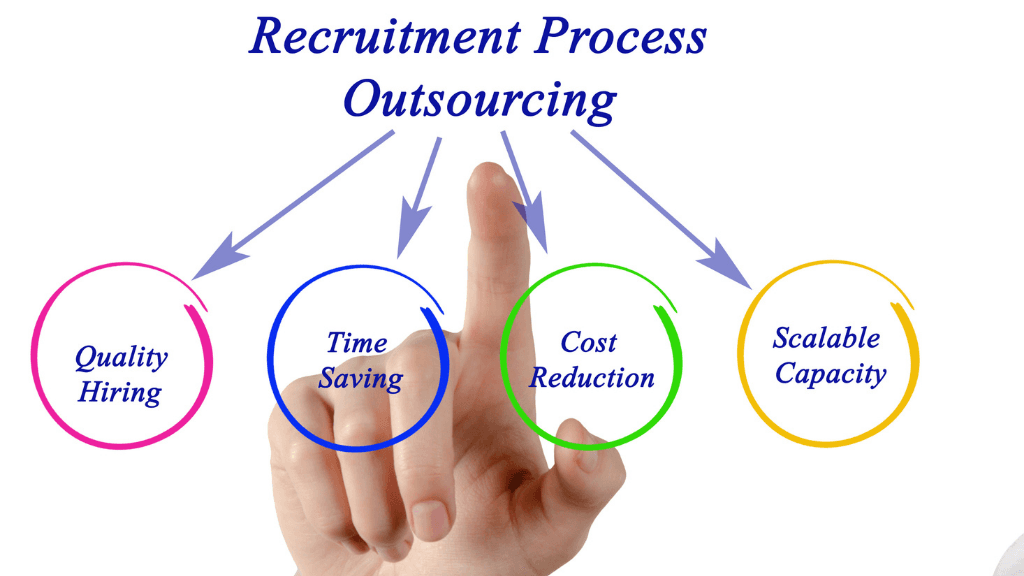
Scalability on demand: Hiring volume can spike without the cost of maintaining a large permanent team
Faster time-to-hire: RPO providers typically reduce time-to-hire to 20–30 days compared to the industry average of 40–60 days for traditional processes
Access to RPO consultants and specialist expertise: Providers bring cross-industry knowledge and pre-built talent networks that most internal teams cannot replicate
Cost predictability: Fixed or variable RPO pricing converts recruitment from a fixed overhead into a scalable investment
RPO AI capabilities: Leading providers use AI-driven sourcing, pre-screening, and predictive analytics to improve match quality and reduce manual effort
What Makes a Good RPO Provider
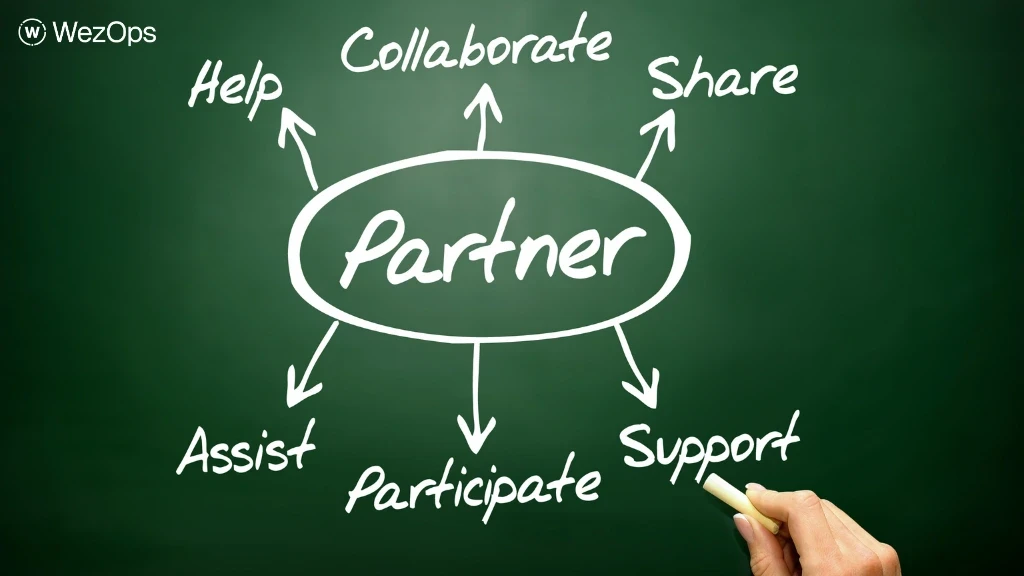
Not all RPO partners are equal, and the provider you choose matters as much as the model itself. A strong enterprise RPO partner will have a track record in your industry, transparent KPI reporting, and the ability to embed seamlessly without your candidates feeling like they are dealing with a third party. They should also demonstrate clear accountability.
Where RPO Works Best
Enterprise RPO tends to deliver the strongest results when organizations are:
Scaling rapidly and need to hire in volume without overwhelming an internal team.
Entering new markets or geographies where local talent and knowledge are limited.
Dealing with specialized or niche roles that require deep sourcing expertise, or operating in highly regulated industries where compliance management adds significant complexity.
What Is In-House Talent Acquisition?

In-house TA is the traditional model in which your organization employs a dedicated recruiting team that owns the full hiring process from requisition to offer. These are your people, embedded in your culture, aligned to your values, and accountable to internal stakeholders day to day.
For many organizations, in-house TA is not just a functional choice; it is a cultural one. There is something distinct about a recruiter who truly lives and breathes your company's mission, and that depth of connection is genuinely hard to replicate from the outside.
What In-House TA Typically Entails
Internal recruiters managing requisitions across business units
Ownership of the employer brand and candidate experience
Direct partnership with hiring managers and HR business partners
Internal ATS management, interview scheduling, and offer processing
Talent pipeline development and internal mobility programs
Reporting into HR or directly to the CHRO
Why Companies Build In-House TA

Cultural depth: Internal recruiters understand the nuance of team dynamics, leadership styles, and unwritten cultural expectations in ways that outside providers often miss
Institutional knowledge: Over time, an in-house team builds pattern recognition about what makes a successful hire in your specific context
Direct control: Every decision, every process, every candidate interaction stays within the organization
Stronger stakeholder relationships: Proximity to the business builds trust with hiring managers and enables faster iteration on what is and is not working
Long-term talent strategy: Internal teams are better positioned to own workforce planning, succession pipelines, and internal mobility programs
What Makes a Strong In-House TA Function
A high-performing internal TA team needs the right technology infrastructure, a clear operating model, and genuine investment from leadership. Without those foundations, in-house teams tend to become reactive, filling reqs rather than building pipelines, and struggle to demonstrate their strategic value.
Where In-House TA Works Best
Internal teams tend to shine in organizations with relatively stable, predictable hiring volume, where cultural alignment and deep business partnership are the primary competitive advantages in recruiting. They are also particularly effective for senior, executive, or highly strategic hires where institutional knowledge and long-standing relationships with hiring managers make a material difference to the outcome.
Choosing Between Enterprise RPO and In-House TA

The most honest answer here is that the right model depends on where your organization is in its growth cycle, what your hiring complexity looks like, and how much strategic control matters relative to scalability.
If your hiring volume is unpredictable, your internal team is stretched thin, or you are entering new markets and competing for talent you have not historically hired, enterprise RPO gives you a meaningful structural advantage. It converts a fixed cost into a variable one, brings process rigor and sourcing reach that most internal teams cannot match at speed, and introduces data-driven hiring practices that improve over time.
On the other hand, if your hiring needs are stable, your culture is a genuine differentiator in the candidate market, and you have the budget and leadership support to invest in a high-performing internal function, building in-house TA gives you a depth of business alignment that RPO simply cannot replicate. The internal recruiter who has spent three years understanding your product teams, your engineering culture, and your leadership preferences is an asset whose value compounds.
To Wrap Up
Enterprise RPO and in-house TA are different tools for different context. While RPO brings scale, speed, specialist expertise, and technology infrastructure that is difficult to build internally in a short timeframe. In-house TA brings cultural depth, institutional knowledge, and strategic partnership with the business that is equally difficult to replicate from the outside.
Many organizations are increasingly landing on a hybrid approach, maintaining a lean internal TA team for strategic and senior hiring while engaging an RPO partner for high-volume, specialist, or project-based needs. That combination can offer the best of both models when it is structured carefully, and the handoffs between internal and external are clearly defined.
The question to ask is not "which model is better?" but rather "which model fits where we are right now, and where we are going in the next 18 months?"
At WezOps, we help talent acquisition leaders design operating models that match their business stage, whether that means optimizing an in-house function, structuring an RPO engagement, or building the infrastructure to run both.
If you are working through this decision, we are happy to think through it with you.
Book a strategy call with us today!
FAQs About Enterprise RPO
What is RPO in recruiting, and how is it different from a staffing agency?
RPO means in recruitment that an external provider takes on part or all of your organization's hiring process on a longer-term, operating under your brand and accountable to agreed performance metrics. A staffing agency, by contrast, typically works on an ad hoc, placement-by-placement basis with no ongoing accountability for your overall recruiting function. This means that RPO is a strategic partnership, while a staffing agency is a transactional service.
Is enterprise RPO worth the cost for mid-sized companies?
It depends on your hiring volume, growth trajectory, and internal capacity. Enterprise RPO tends to deliver the clearest return for organizations that are scaling quickly, hiring in high volume, or expanding into markets where they lack sourcing expertise. For mid-sized companies with stable and predictable hiring needs, the full enterprise RPO model may be more infrastructure than the business requires, though an on-demand or hybrid RPO arrangement can offer a more proportionate fit.
How do CHROs decide whether to build in-house TA or go with an RPO provider?
The most useful framework is to assess three things: current hiring volume and predictability, internal team capacity and capability, and how much cultural alignment matters relative to speed and scale in your candidate market. If your team is consistently stretched, your time-to-fill is climbing, or you are entering new talent markets, RPO likely makes sense. If cultural depth, senior hiring relationships, and strategic business alignment are your primary differentiators, investing in a strong in-house function is usually the better call. Many CHROs end up combining both, using an RPO partner to handle volume and speciality hiring while keeping a core internal team for strategic roles.
Related Articles