Blog Article

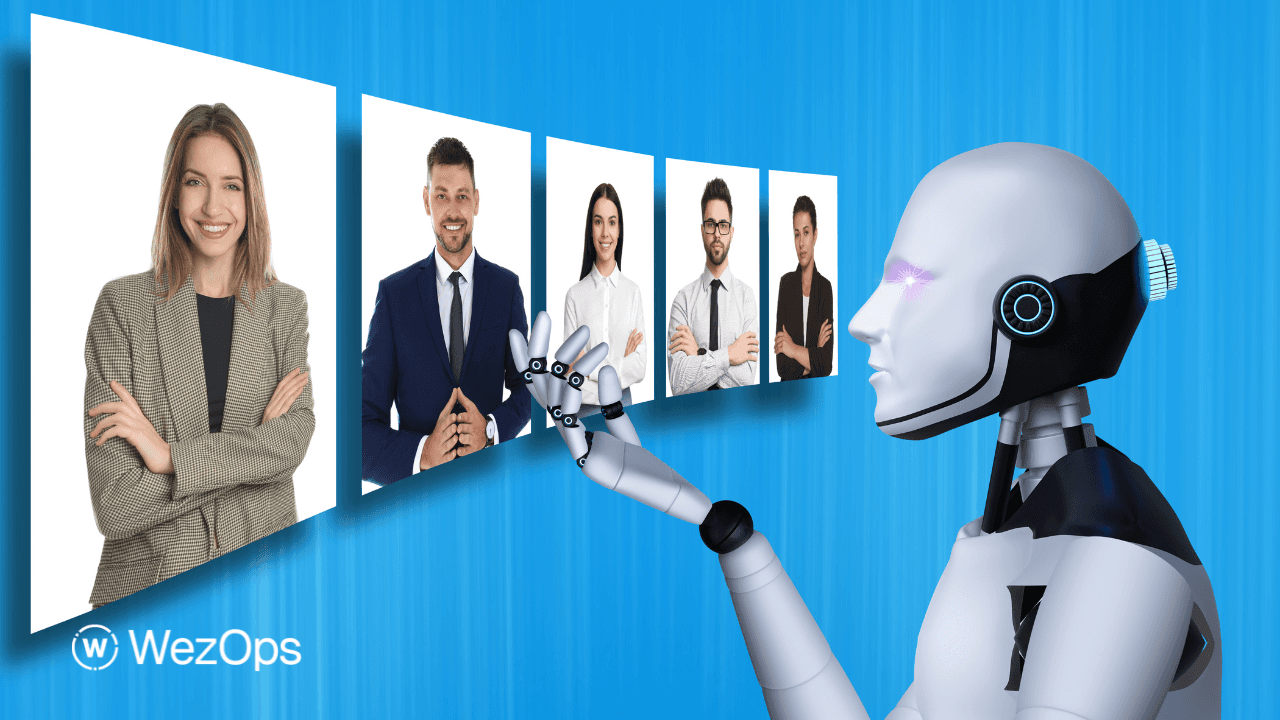
Recruiting teams are under more pressure than ever to move faster, hire smarter, and do more with leaner resources. It is no surprise, then, that AI candidate screening has moved from a fringe experiment to a mainstream practice in a very short space of time. Today, 57% of companies already use AI in hiring, and 74% say it has improved the quality of their hires. Those numbers sound compelling and in many ways they are but the full picture is more nuanced than the headline suggests.
If you are a CHRO or talent acquisition leader thinking through where AI-based candidate screening fits in your function, this article is for you. Not a list of vendor promises, but a grounded look at what AI screening does well, where it falls short, what the compliance landscape looks like right now, and what is coming next.
What AI Candidate Screening Does

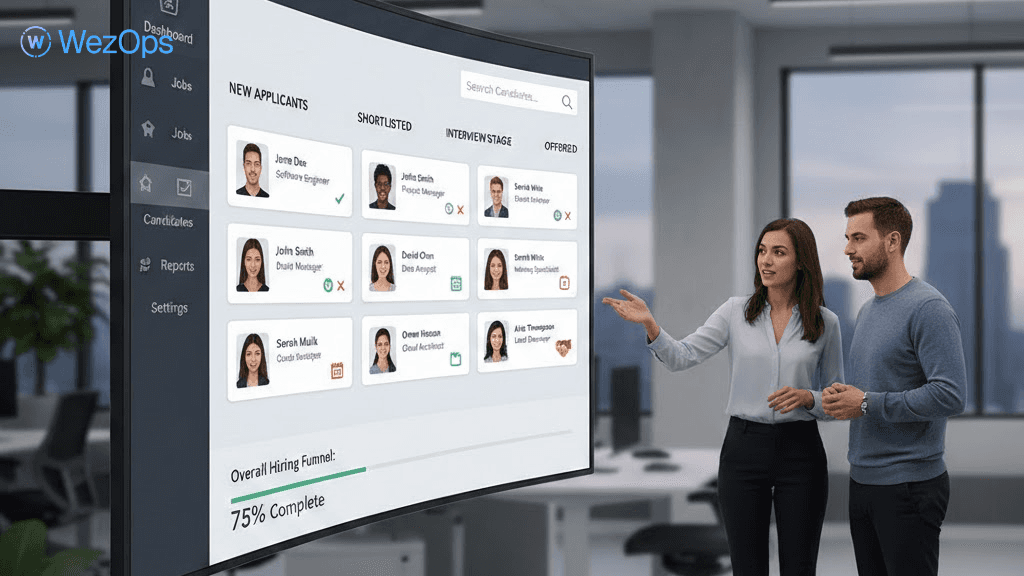
At its most basic level, AI candidate screening uses software to evaluate applications, resumes, and candidate profiles against defined criteria doing in seconds what would otherwise take a recruiter hours. But the category has expanded well beyond resume parsing. Today's tools cover a range of functions across the hiring process.
Resume parsing and keyword matching remains the most widely used application, with accuracy rates sitting around 94%. The system scans submitted documents, extracts relevant information, and ranks candidates against a defined job profile.
Skills-based assessment tools go a step further by presenting candidates with structured tests that evaluate job-relevant competencies directly, rather than inferring them from a CV particularly valuable in technical hiring.
Video interview analysis tools record candidate responses to structured questions and analyze them for content and communication clarity. This has become common for high-volume screening where a live conversation with every early-stage candidate is not practical.
Automated pre-screening conversations delivered via chat or asynchronous video allow candidates to answer qualifying questions at their own pace before a human ever gets involved.
Together, these tools promise the same core benefit: time back for recruiters to focus on the conversations and judgments that actually require a human.
Benefits of AI Candidate Screening
When implemented thoughtfully, the efficiency gains from AI candidate screening are genuine. Organizations using AI screening report an average 33% reduction in time-to-hire and cost-per-hire, with enterprise companies seeing average annual savings of around $2.3 million. Structured, criteria-based screening also creates a more consistent evaluation process as every applicant is assessed against the same criteria, without the fatigue-driven inconsistency that affects human reviewers working through large applicant pools.
Candidate experience is another area where AI screening adds real value. Research shows that 82% of candidates appreciate faster application processing and 79% value improved response times, both direct outcomes of automating early screening stages. In competitive talent markets, such responsiveness matters for the employer brand as much as it matters for efficiency. When properly implemented and monitored, AI screening can also reduce certain forms of hiring bias by up to 60% across gender, racial, and educational categories though this benefit depends entirely on how well the system is designed and governed.
Downside of AI Candidate Screening
The most significant issue with AI for candidate screening is bias. The most widely referenced example is Amazon's internal AI recruiting tool, which was scrapped after it was found to systematically downrank female candidates. The system had been trained on a decade of historical hiring data, and because past hires were predominantly male, the model simply learned to replicate that pattern.
Also, automated video and voice analysis tools have been found to produce skewed results for candidates with speech differences, strong accents, or communication styles that differ from the system's training population. Neurodiverse candidates have similarly been disadvantaged by platforms that score non-traditional response patterns lower, regardless of actual competence.
There is also the problem of what AI cannot see. Resumes capture facts, but not trajectory, potential, or the kind of transferable experience a skilled human recruiter would recognize. An AI tool calibrated to narrow criteria will consistently filter out candidates who do not match past patterns, which is precisely the profile of many non-traditional but high-potential applicants. More than half of companies using AI in hiring have expressed concerns about screening out qualified candidates or lacking adequate human oversight, and those concerns are well-founded.
What's Next for AI Candidate Screening in 2026 and Beyond
The efficiency gains are real, the risks are documented, and the tools are maturing fast. But the more interesting question for TA leaders right now is not where AI screening has been, but where it is heading. Here are four things worth watching closely in 2026.
Autonomous recruiting agents: AI is moving beyond filtering toward taking independent action, scheduling interviews, sending follow-ups, progressing candidates through stages, and flagging pipeline gaps without a recruiter initiating each step.
Voice-first screening: Conversational AI that conducts spoken pre-screening interviews is gaining traction for high-volume and frontline hiring.
Stricter regulatory compliance: New York City’s Local Law 144, Colorado’s AI act and The EU AI Act are all making bias audit cadence, and candidate disclosure, a baseline operational requirements.
Human-in-the-loop as a design standard: The industry is now driven by regulation to include human review checkpoints directly into their AI architecture, as a core design principle.
Predictive retention and fit scoring: The next frontier beyond skills matching is predicting how long a candidate will stay and how well they will perform in a specific team context.
Top AI Candidate Screening Tools to Watch in 2026
The market is crowded, but a handful of platforms stand out in each category based on current adoption, product maturity, and where the technology is heading.
End-to-End Platforms: HeyMilo, Greenhouse
Engagement and Scheduling: Paradox (Olivia), GoodTime
Screening and Assessment: HireVue
Interview Intelligence: Metaview
What Responsible AI Screening Looks Like in Practice

These are a few things that separate effective AI screening implementations from inefficient ones:
Human oversight at every consequential stage is non-negotiable. AI should narrow the field, not make the final call. Any automatic rejection pathway needs a human review option built in.
Job criteria fed into a screening tool should be validated against actual performance outcomes, not just matched to past hires.
Regular bias audits are now a standard operating requirement, 72% of organizations using AI screening conduct them, and in several jurisdictions they are legally required.
Also, telling candidates when AI is involved in evaluating their application is both good practice and, in a growing number of locations, a legal obligation.
To Wrap Up
AI candidate screening in 2026 is a powerful set of tools that, when implemented carefully and governed well, genuinely improve recruiting efficiency and consistency. But the gap between a thoughtful implementation and a rushed one is wide, and the consequences, from missed candidates to legal exposure, are significant.
The TA teams that will get the most out of AI screening are the ones that treat it as an operational system requiring ongoing design, validation, and oversight and not a product you plug in and forget. The technology is ready to be useful; the question is whether your processes are ready to use it responsibly.
FAQs About AI Candidate Screening
How accurate is AI candidate screening compared to human reviewers?
It depends on the function. Resume parsing and skills matching tend to perform at high accuracy rates of around 89 to 94% and in those tasks, AI can match or outperform fatigued human reviewers handling large volumes. For more nuanced assessments like communication style or potential, accuracy drops and bias risk increases. Most TA leaders find AI works best as a first-pass filter, with human review built into every stage that matters.
Can AI candidate screening tools introduce hiring bias?
Yes, and this is one of the most well-documented concerns in the field. If the data used to calibrate a screening tool reflects historical patterns that were themselves biased by gender, race, educational background, or communication style, the tool will learn and reproduce those patterns at scale. Regular bias audits, diverse training data, and human oversight at decision points are the primary ways to manage this in practice.
What should CHROs know about legal compliance for AI screening in 2026?
The regulatory landscape has shifted significantly. New York City, California, and Colorado all have specific requirements covering automated hiring tools, including mandatory bias audits, candidate notification obligations, and multi-year record retention. At the federal level, the EEOC has taken enforcement action against companies whose AI tools discriminated against protected groups, so CHROs should work closely with legal counsel when evaluating or expanding their use of AI in screening.
Related Articles